Der Krawall, die Überraschung, und das Seepferdchen
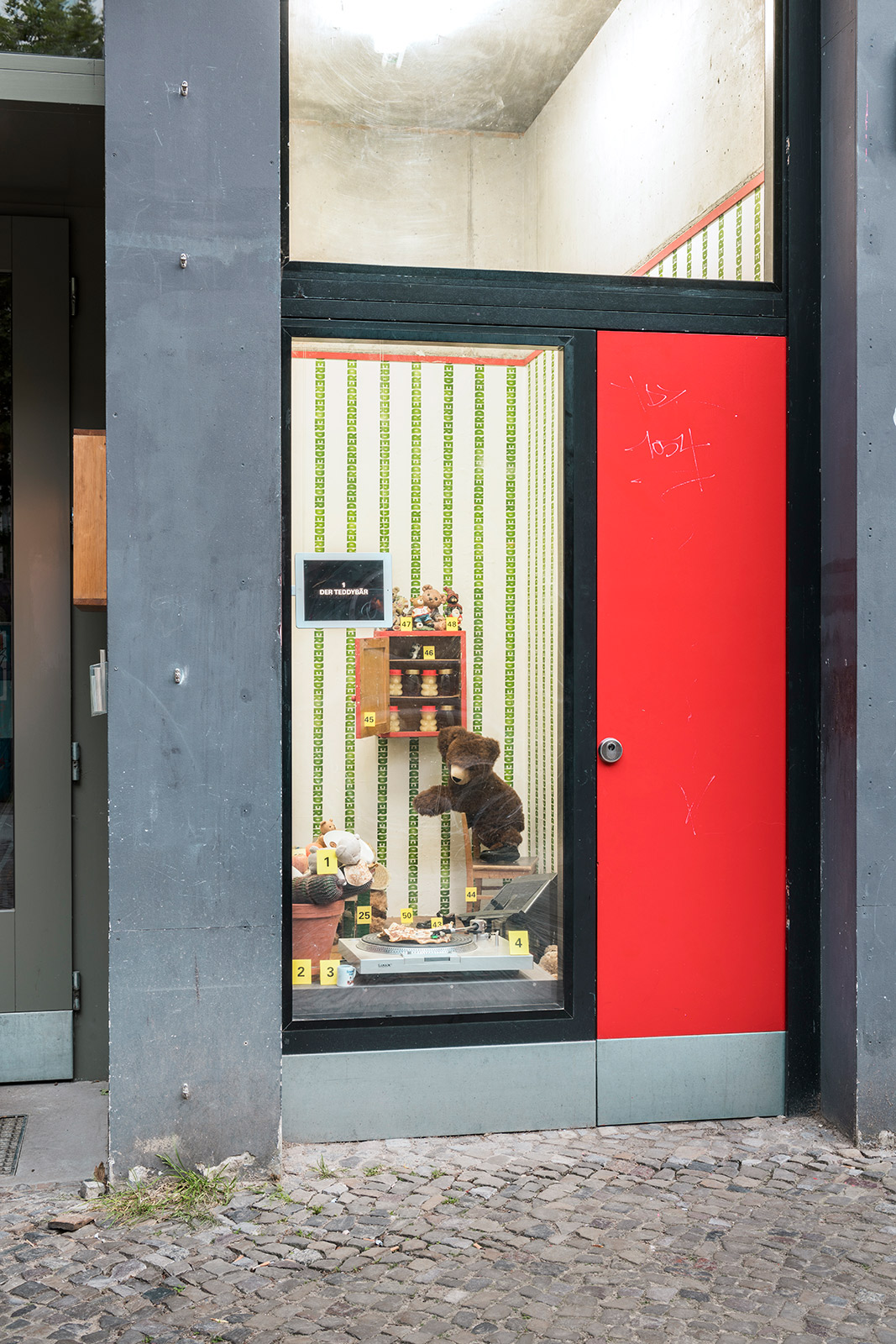
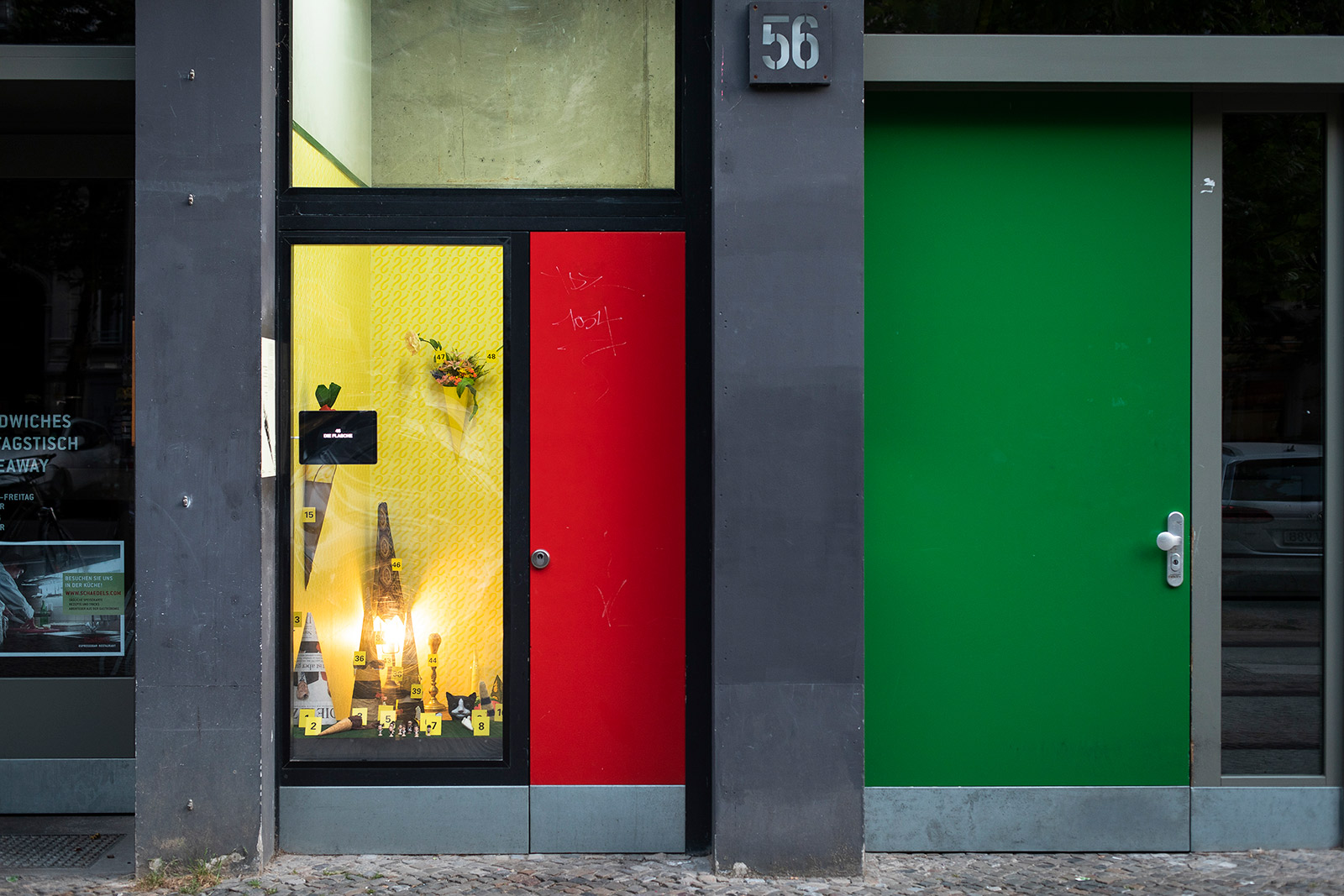
Der Krawall, die Überraschung, und das Seepferdchen, 2018. Three consecutive installations, each three to four weeks long, in five square meter room. Materials variable.
During my first year living in Berlin, I enrolled in a German language “integration course” and, along with my fellow classmates from around the world, began the struggle to master the grammatical complexities of the German language. One of the fundamental challenges is learning how to use the gendered definite articles der, die, and das correctly. To a beginning German student, the world quickly transforms into a landscape of objects with der? die? das? floating above them all on murky clouds.
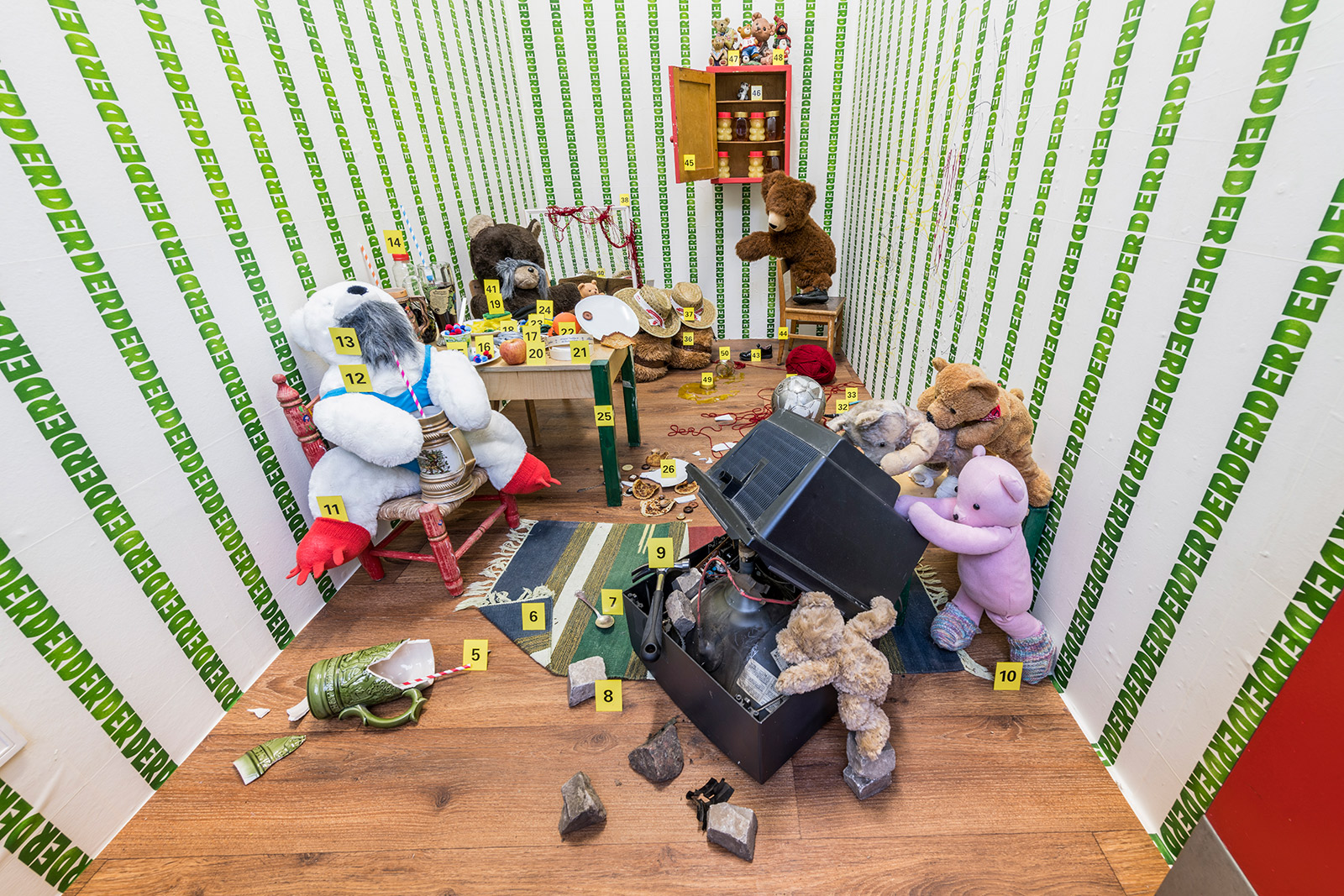
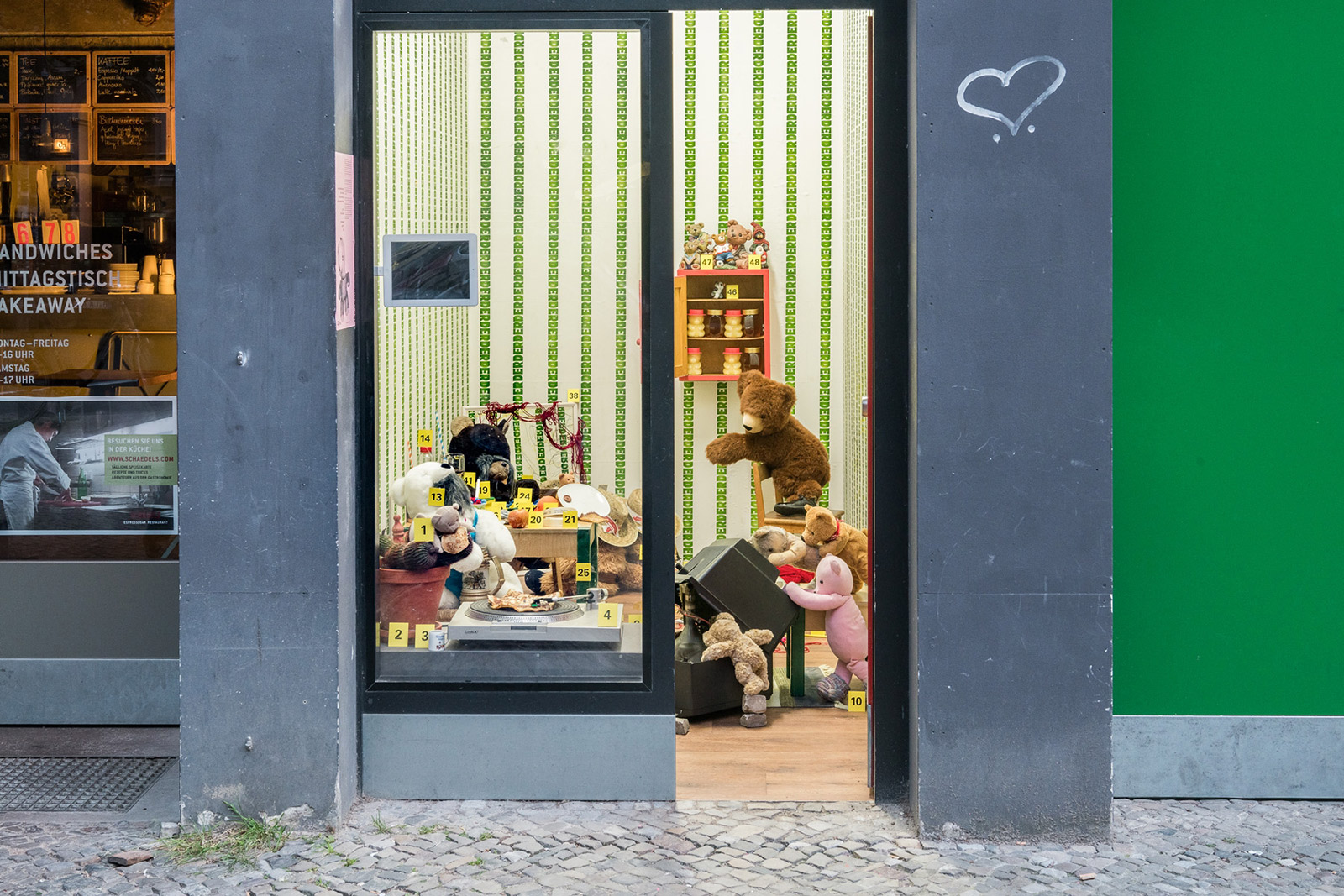
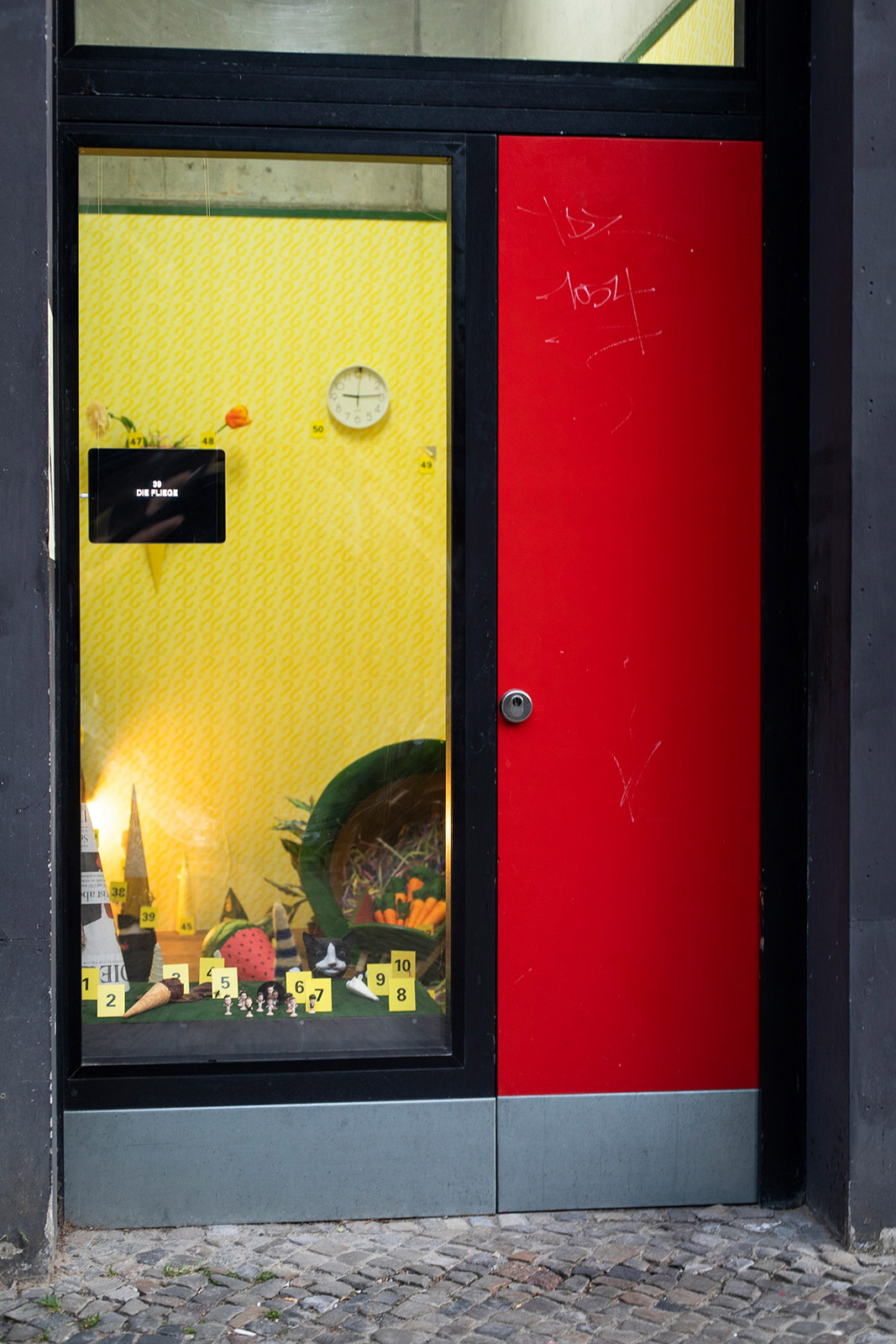
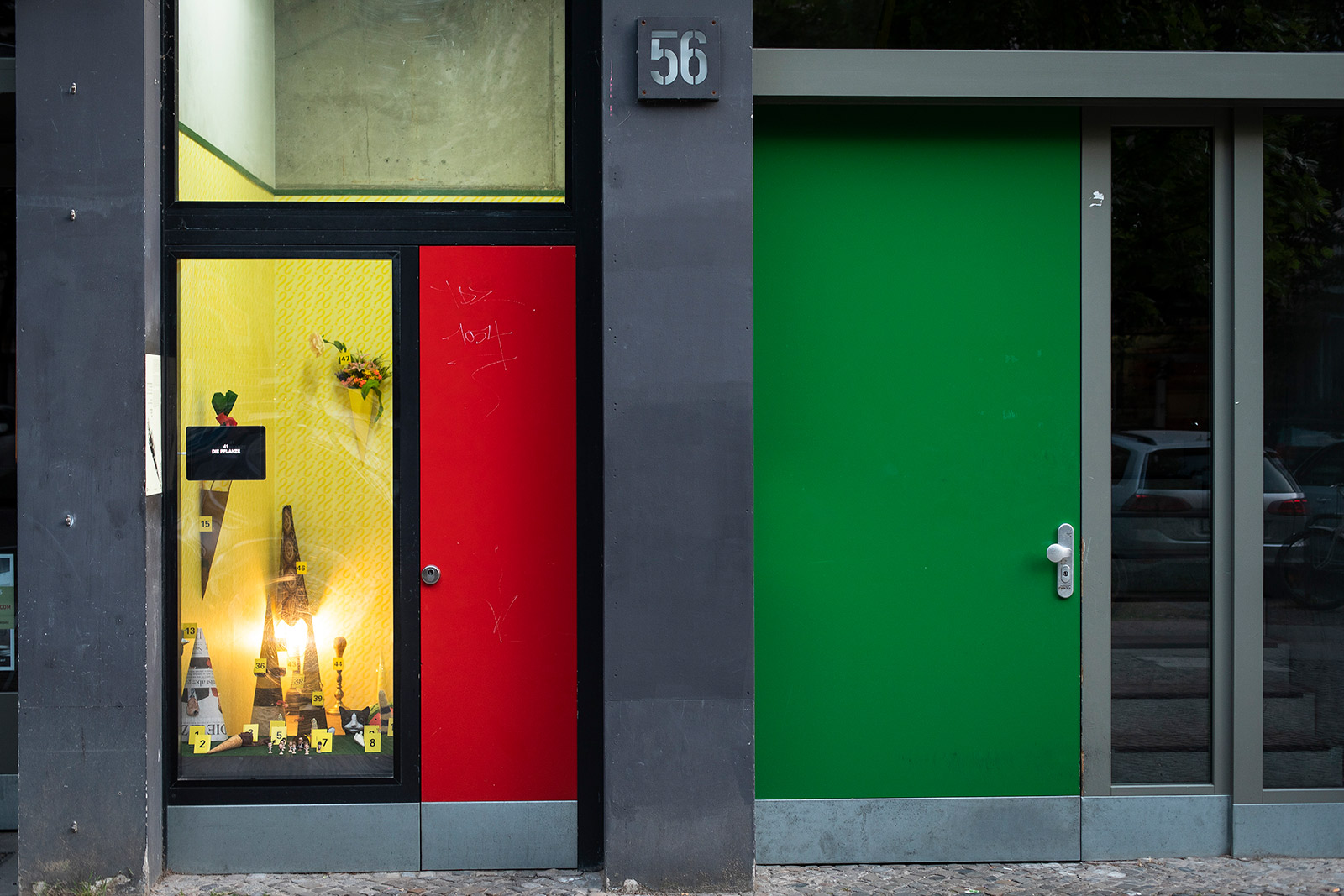
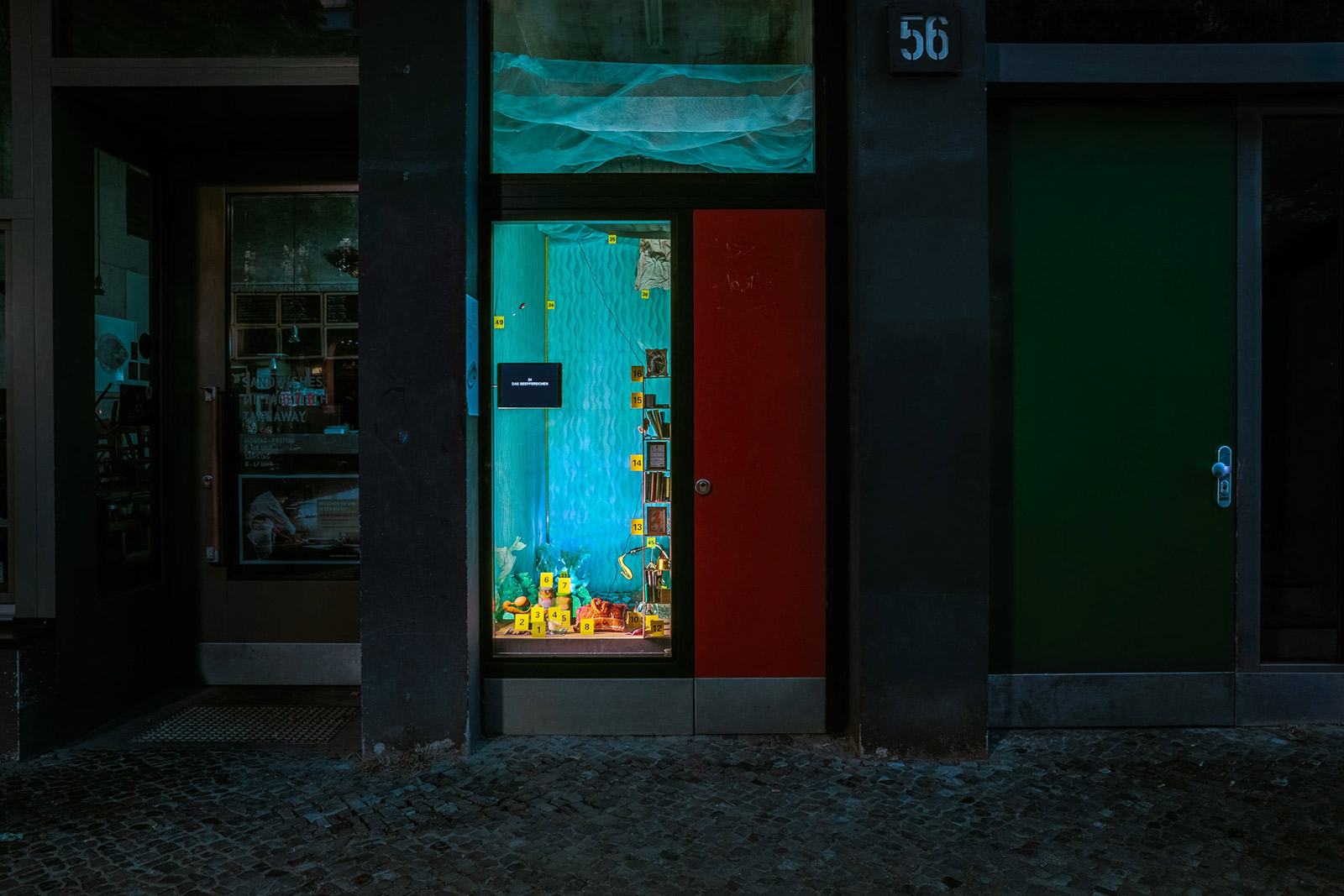
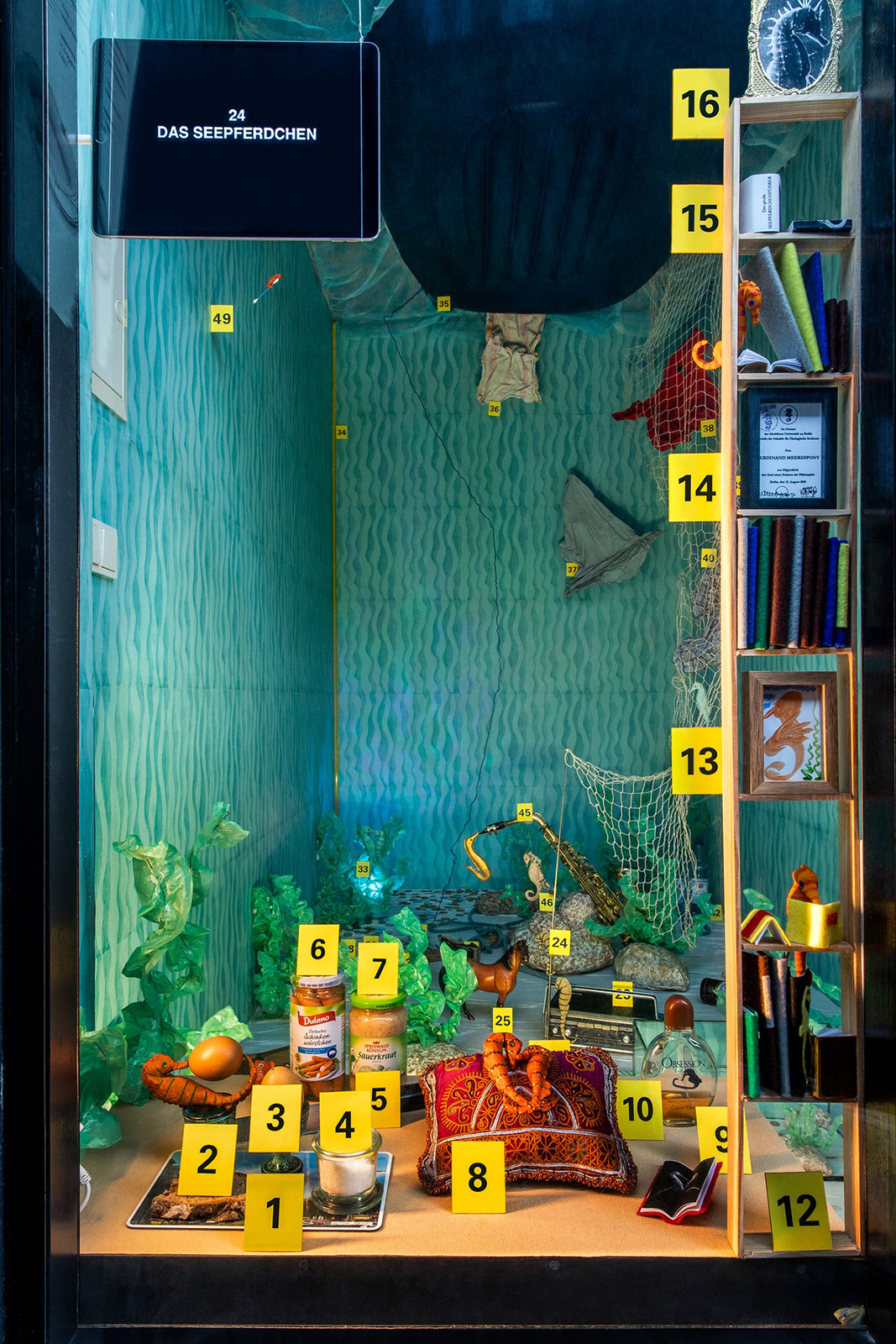
Curator Lotte Møller invited me to do an exhibition at a tiny space in Berlin known as die raum (this means “the room,” but the word is written intentionally using the wrong definite article, “die” instead of “der”). The space is only five square meters (about 50 square feet) and exhibitions are viewed through a glass door into the space at street level. Motivated by the desire to make something pedagogically useful for my show at die raum, and also playing off the name of the space itself, I designed a “grammatical triptych” of sequential scenes. The title of each scene is a word with its corresponding der, die, or das article. Each scene was staged using only objects that share the same article. By later recalling the objects that appeared together in a scene, a viewer could associate the objects in the room with one another and learn the correct articles. The scenes functioned in a way similar to the mnemonic device known as the memory palace, a “method of loci,” used by the Greeks and Romans to memorize sets or sequences of information through spatialization.
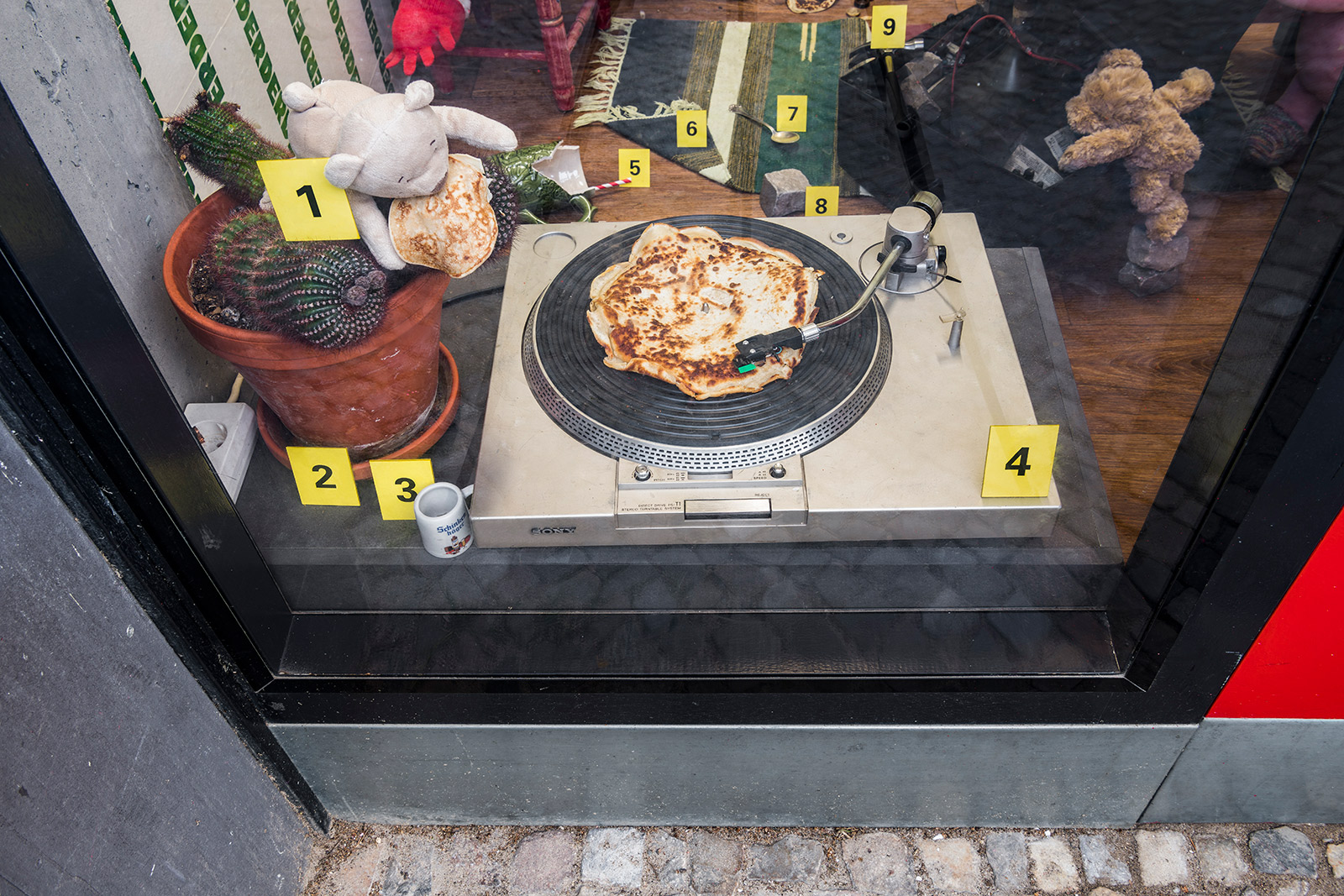
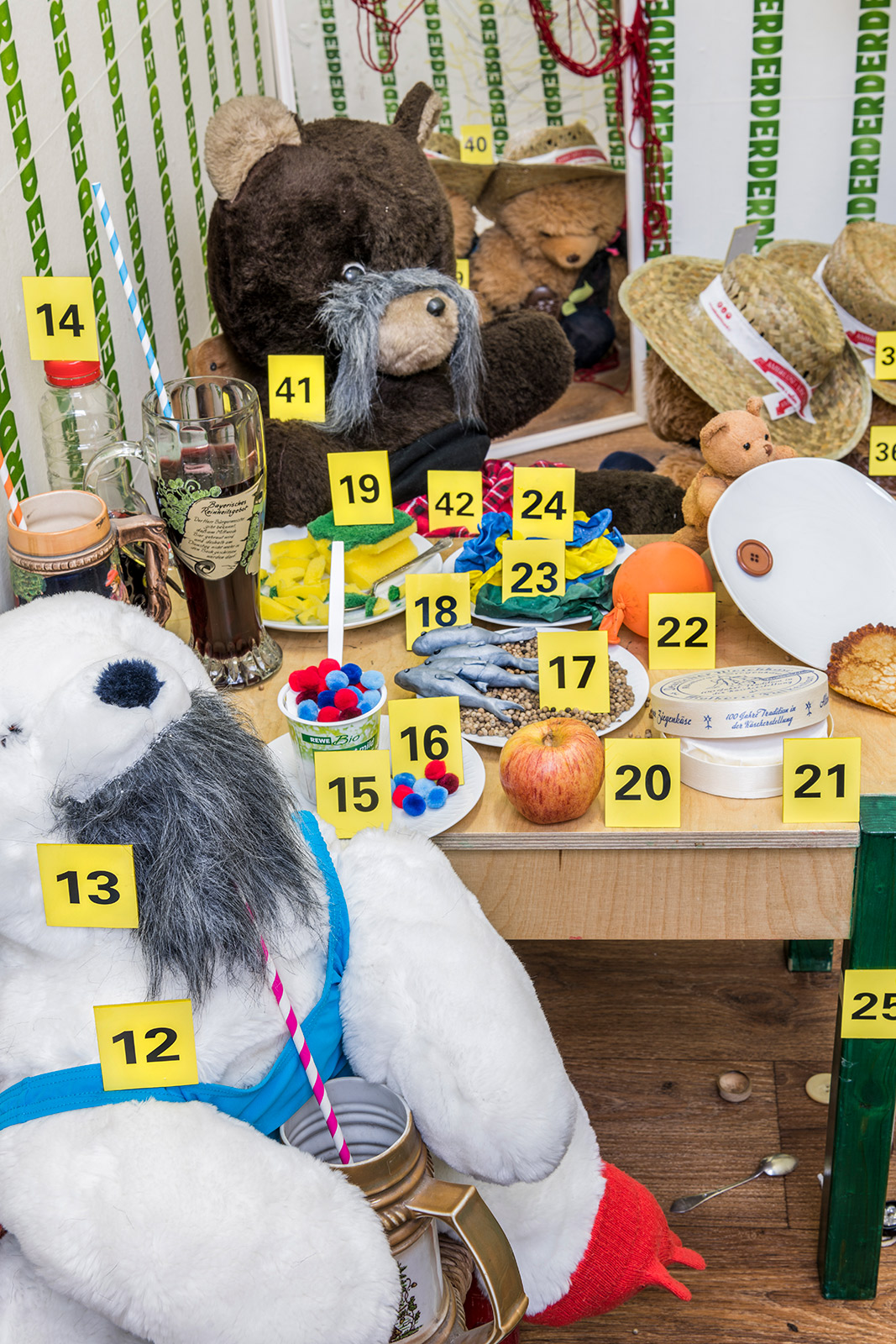
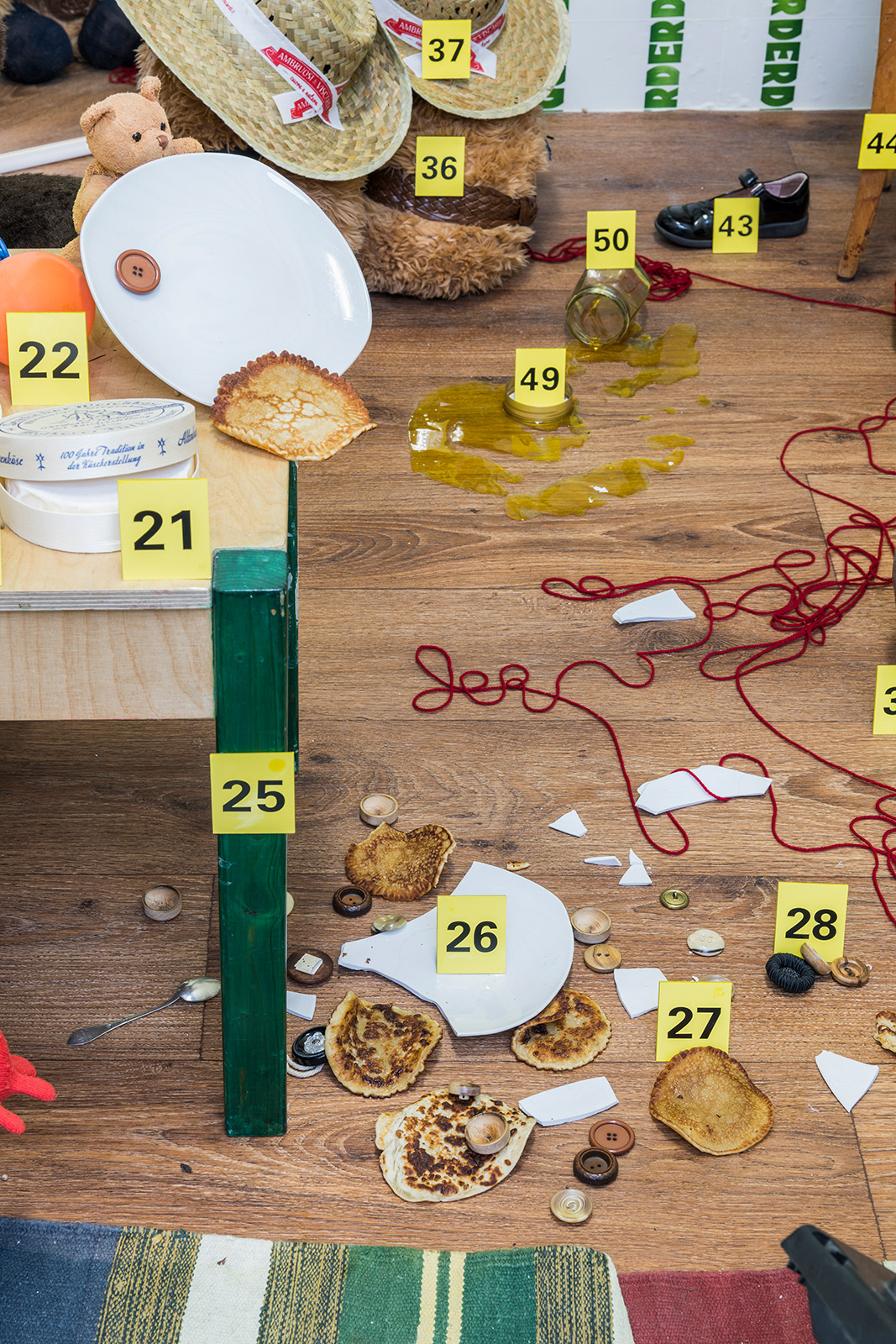
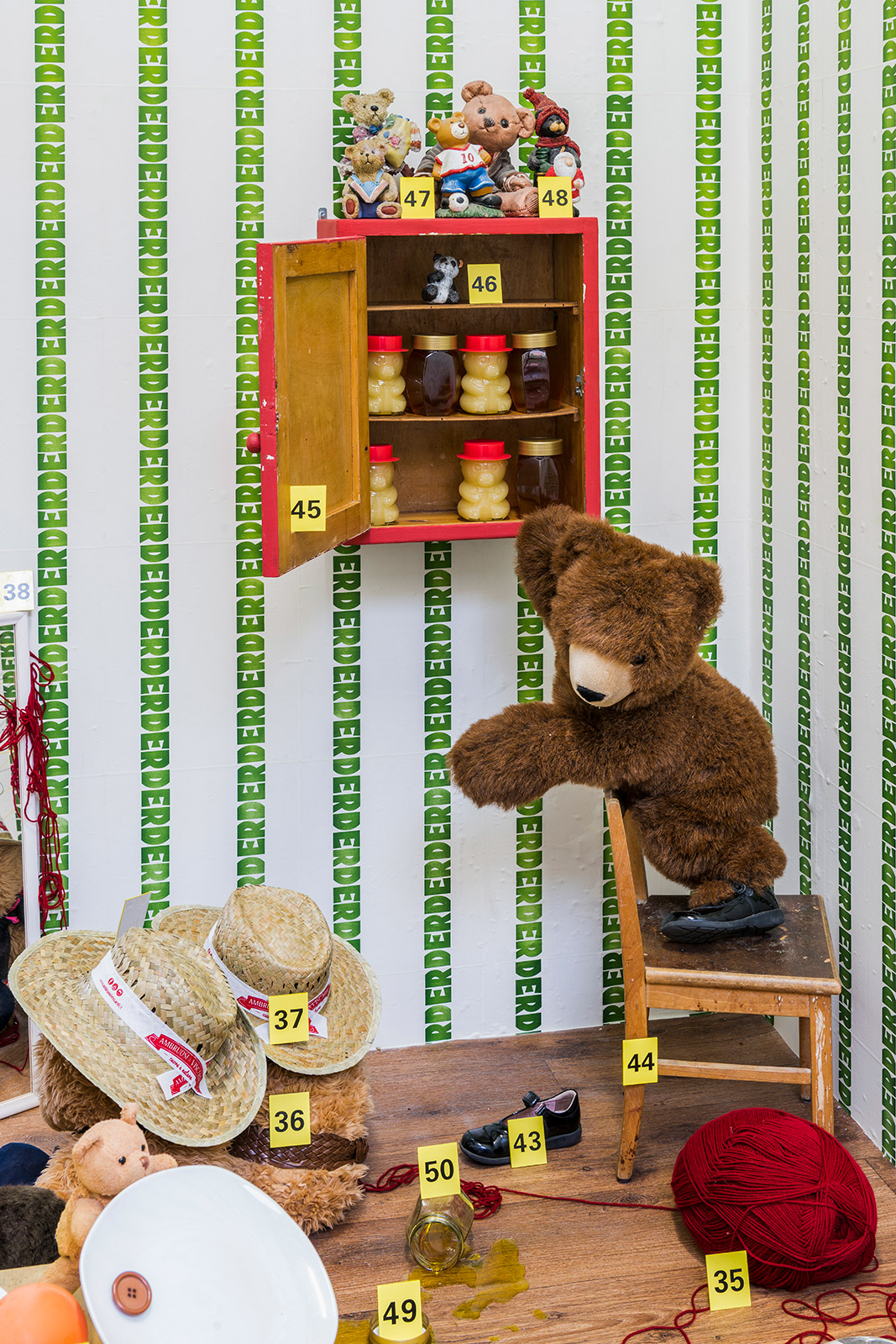
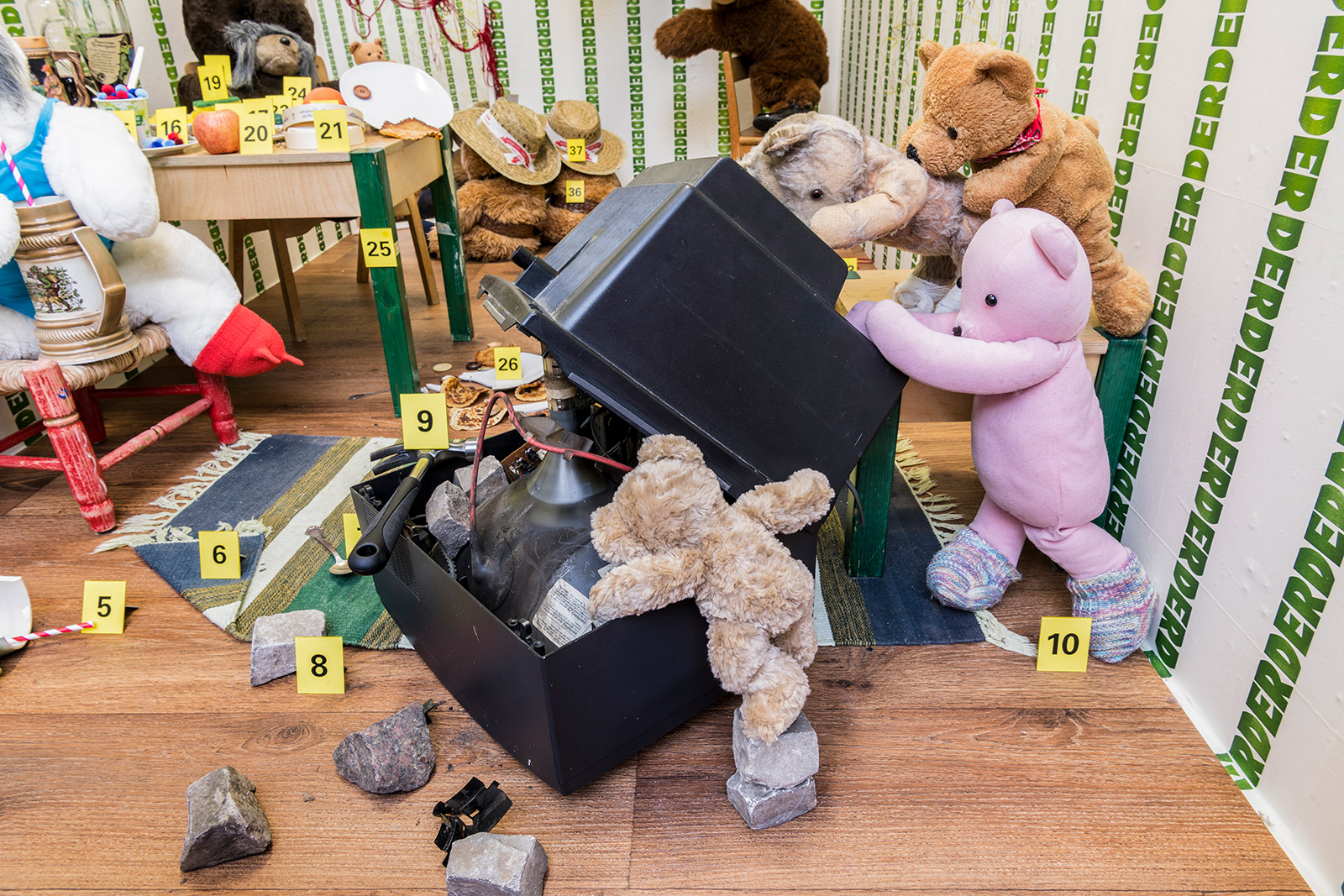
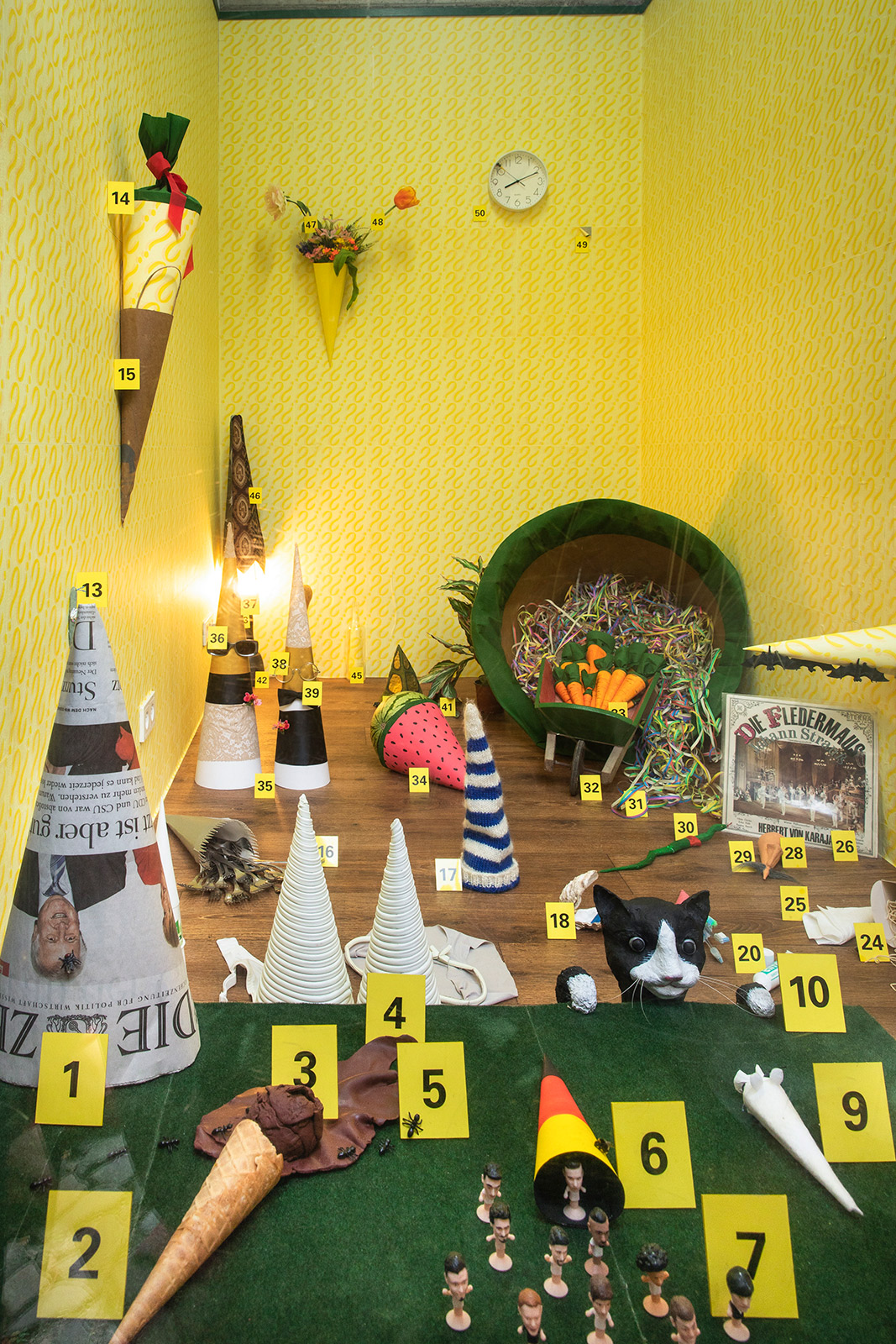
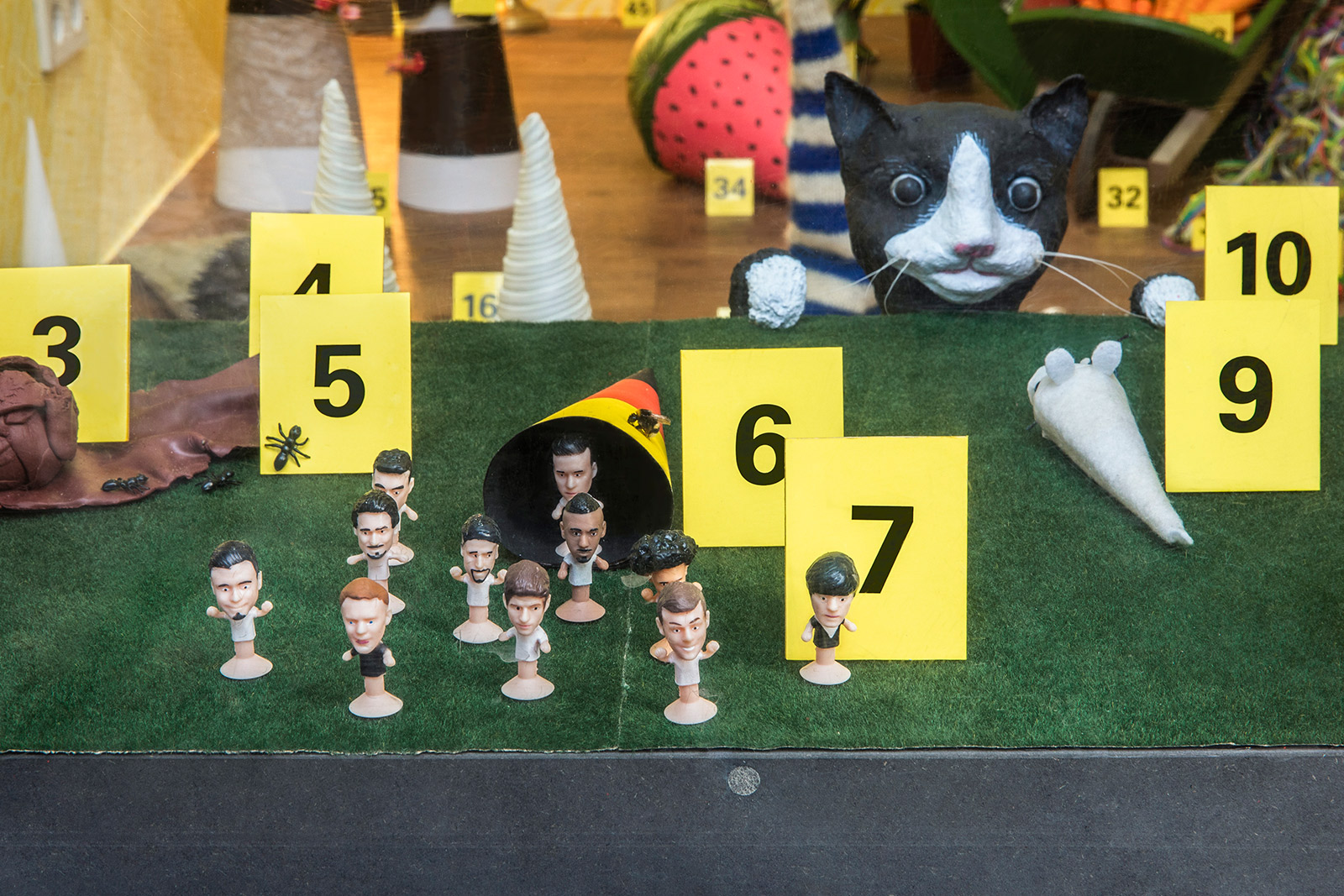
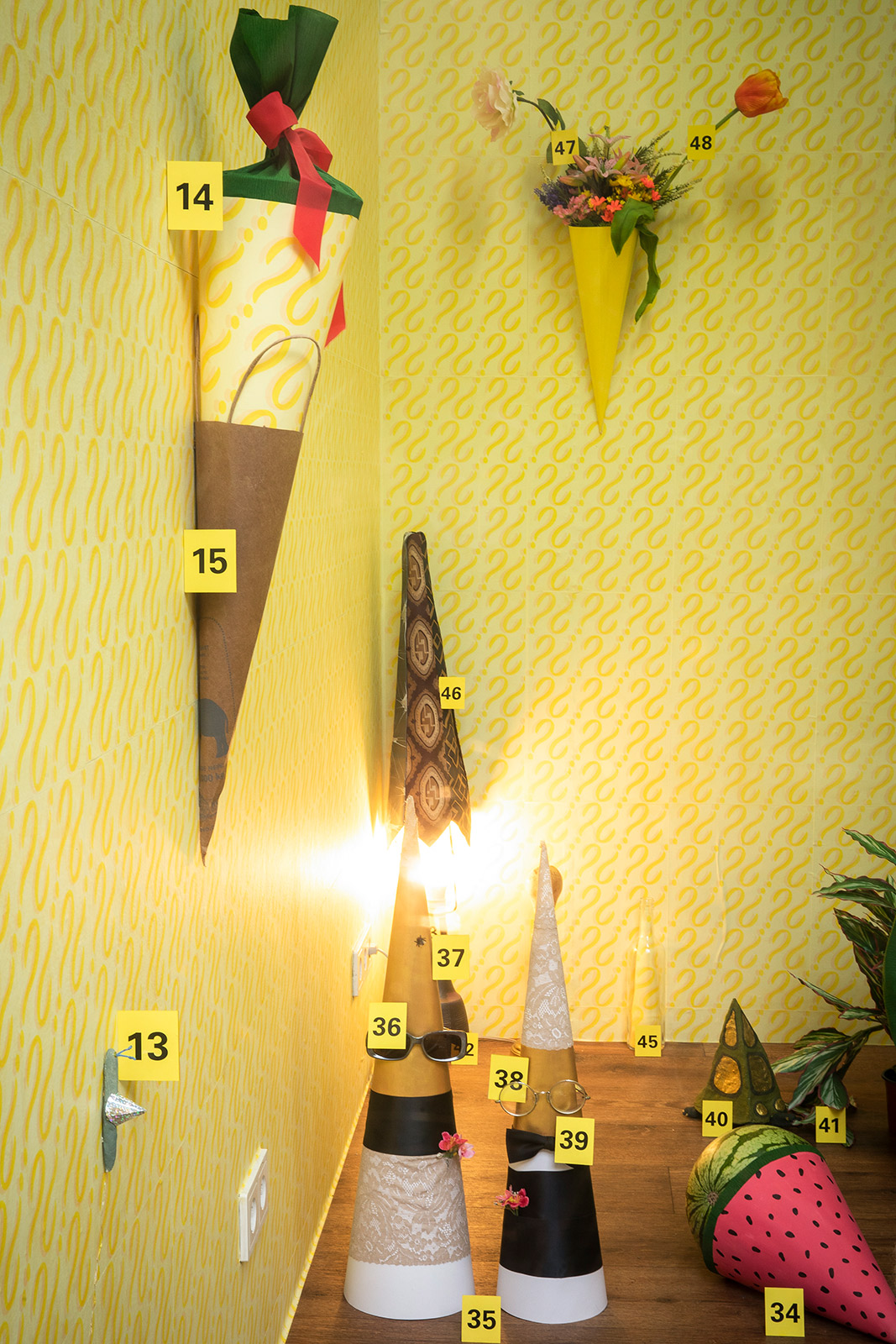
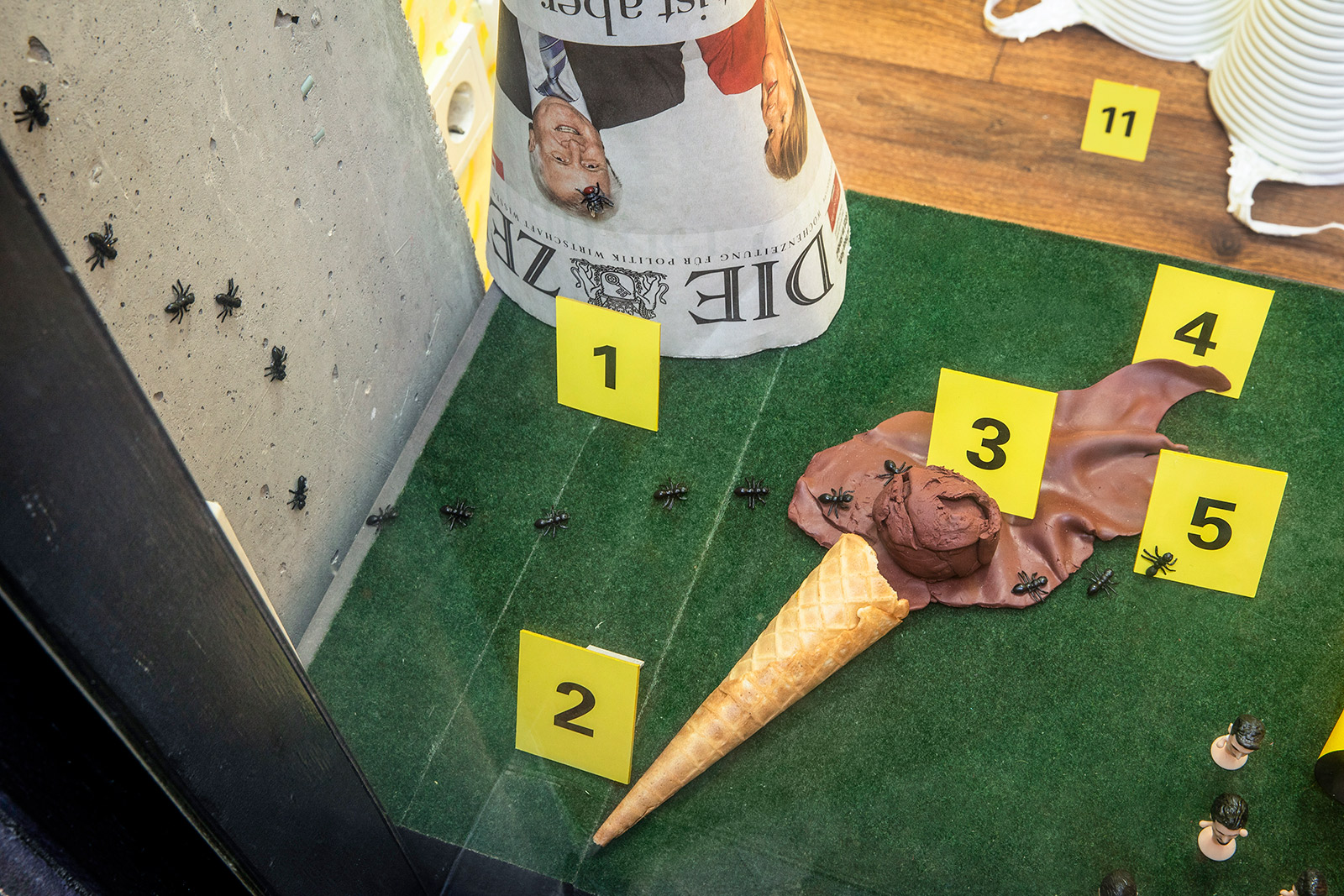
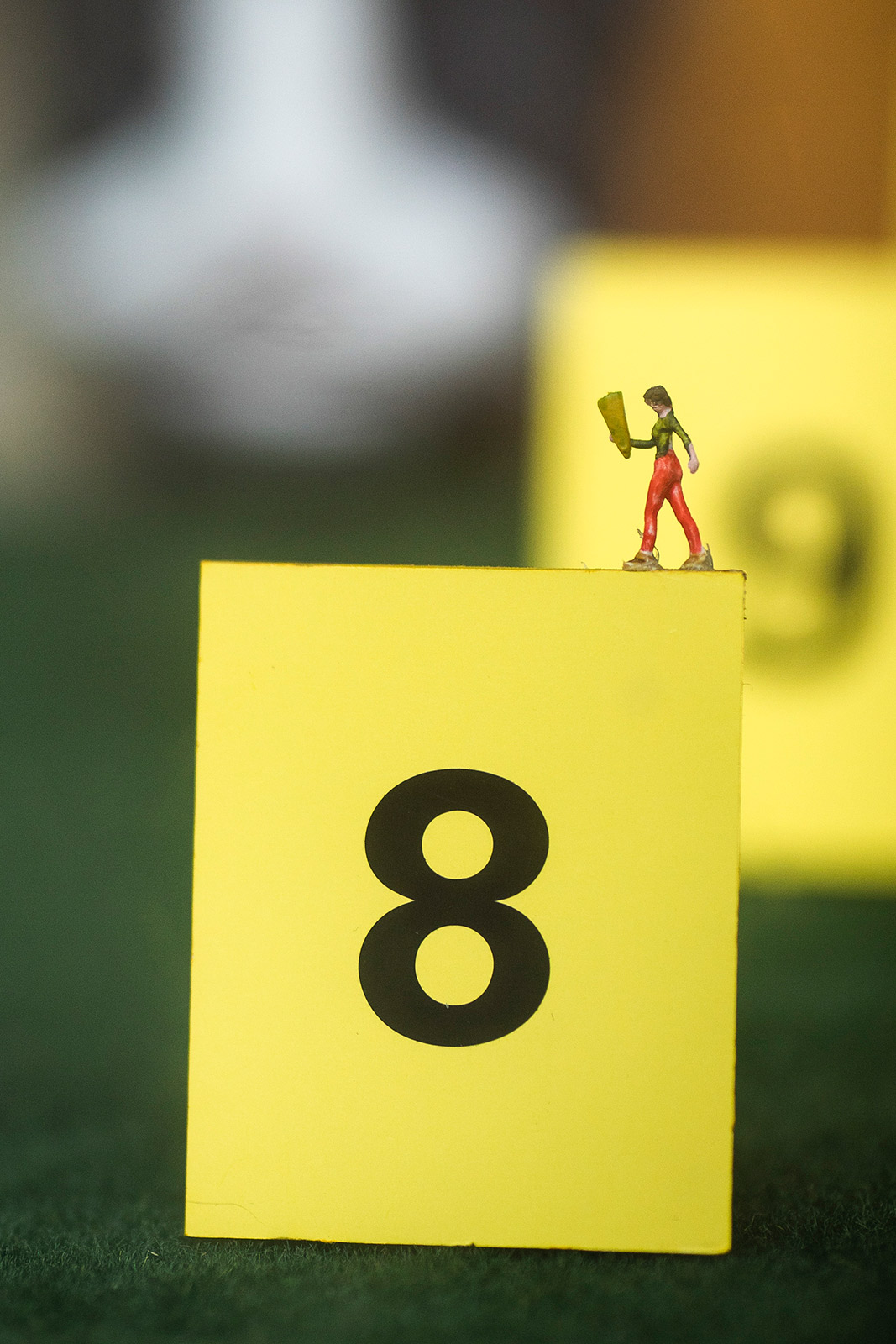
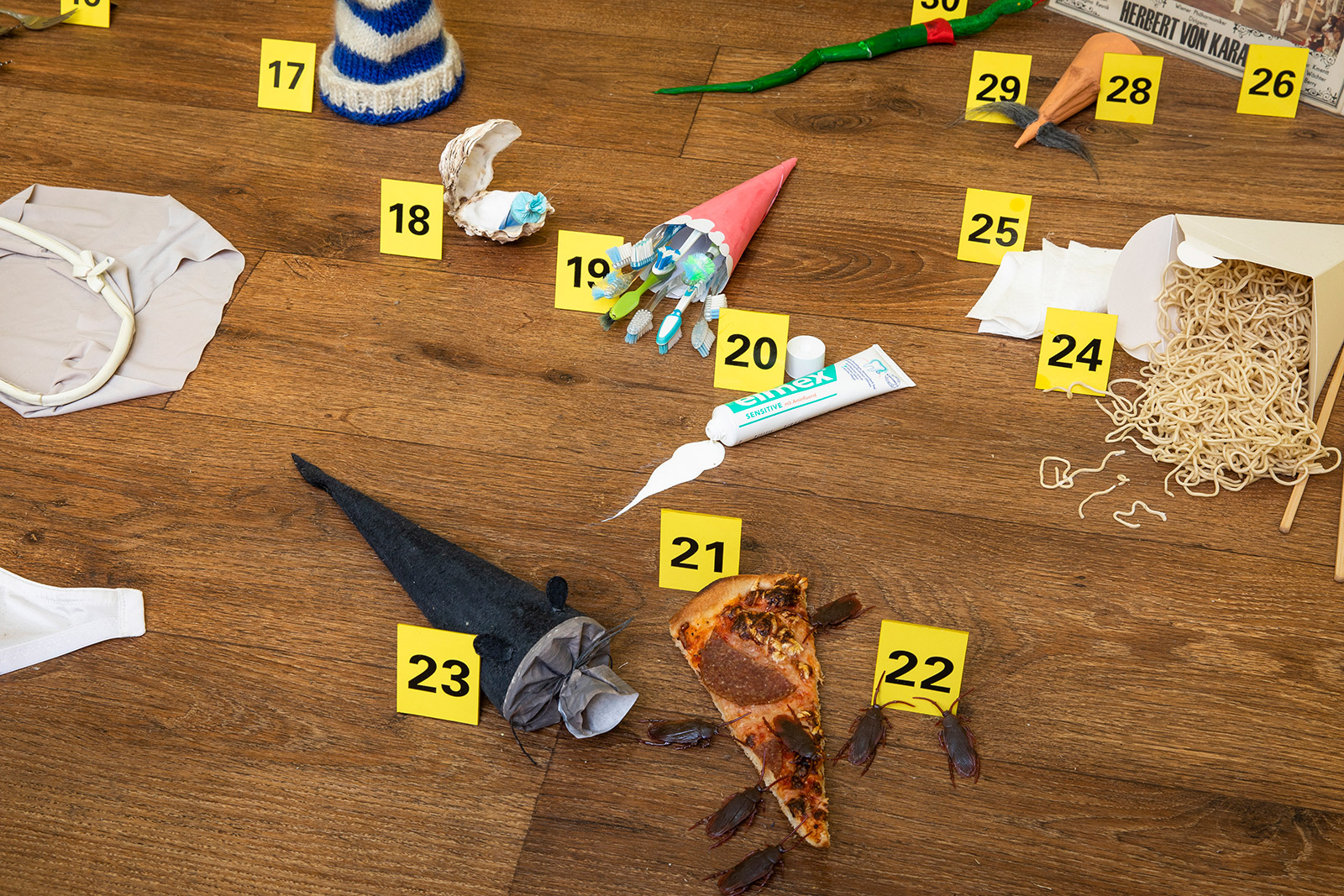
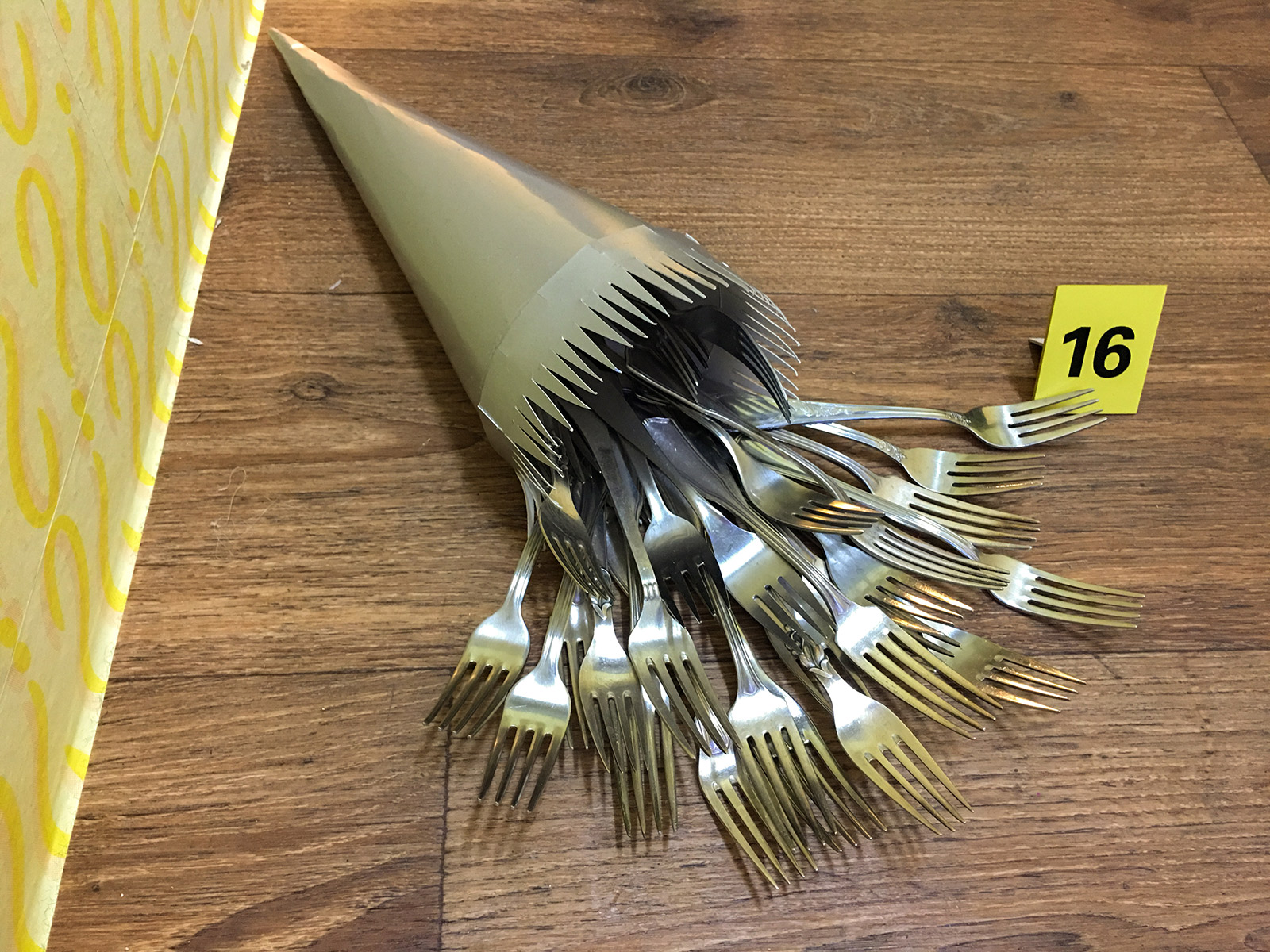
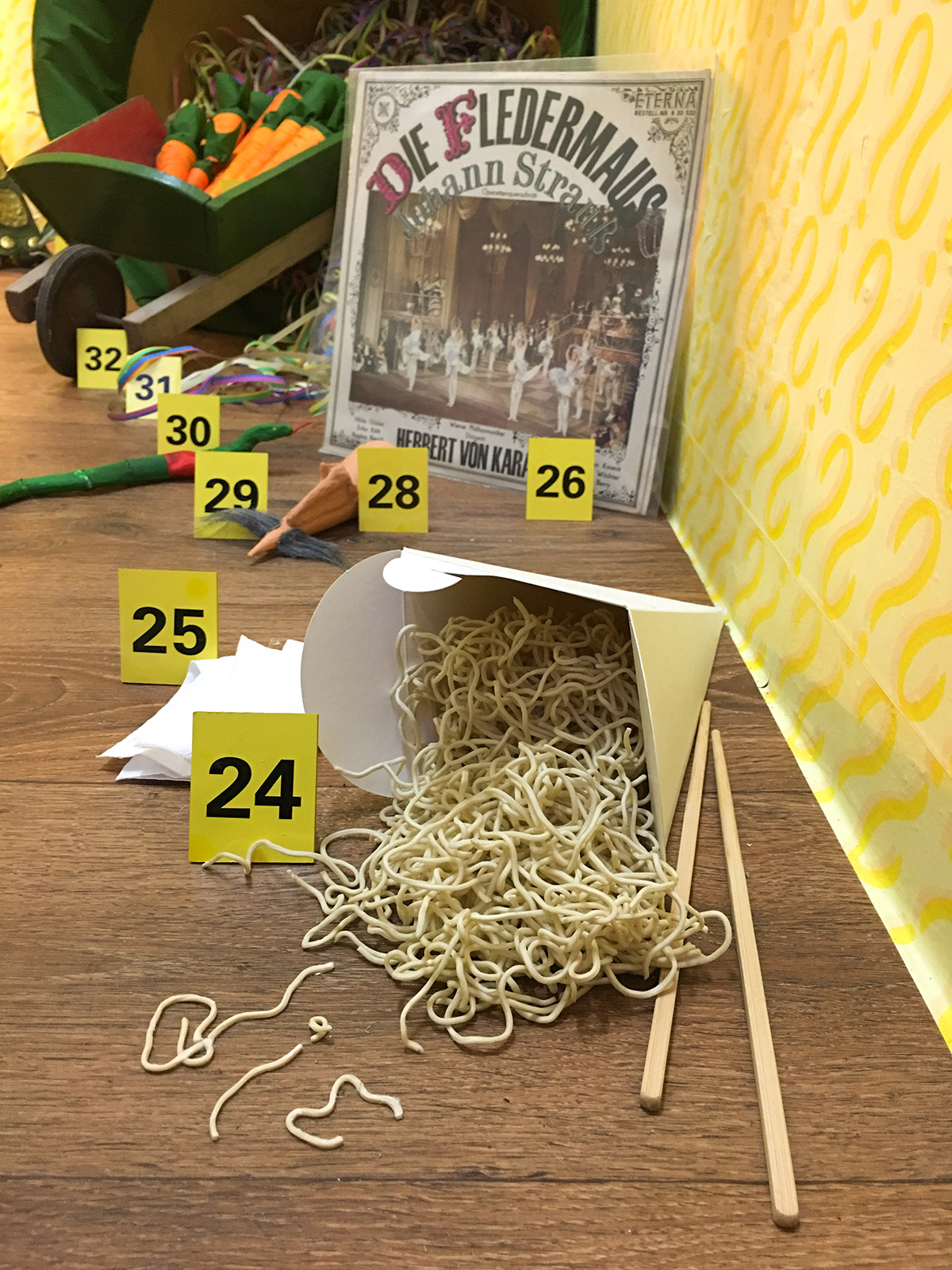
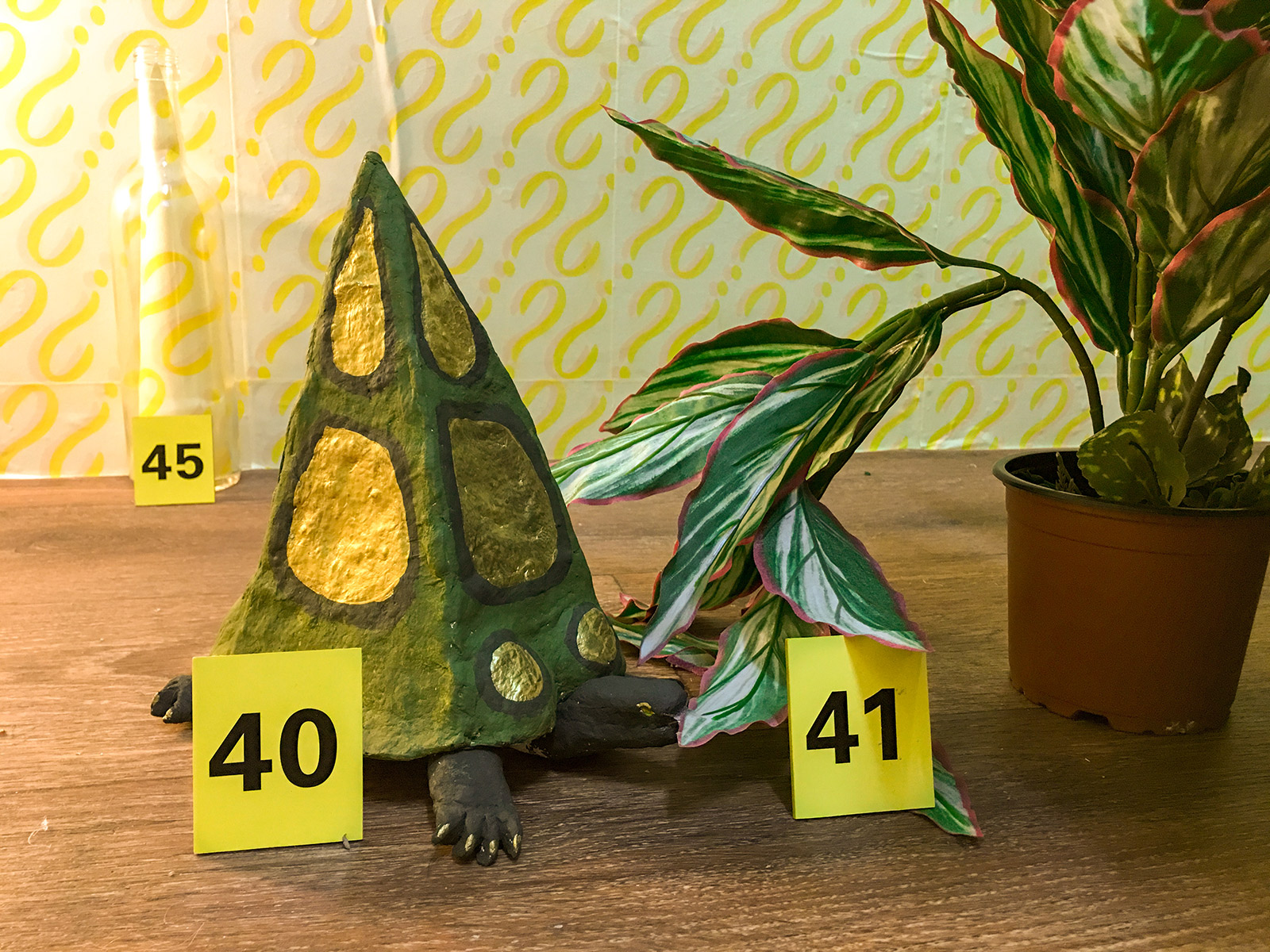
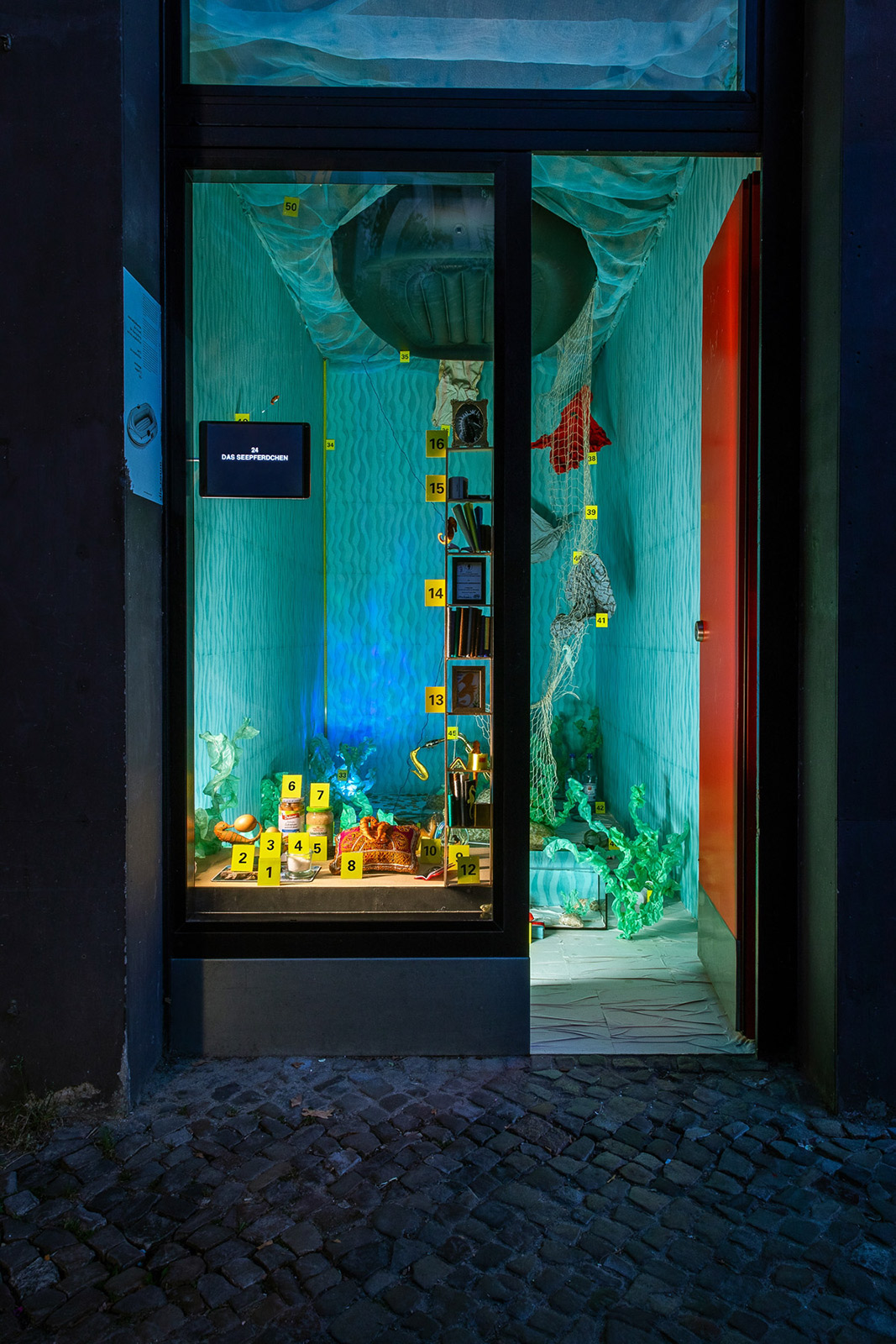
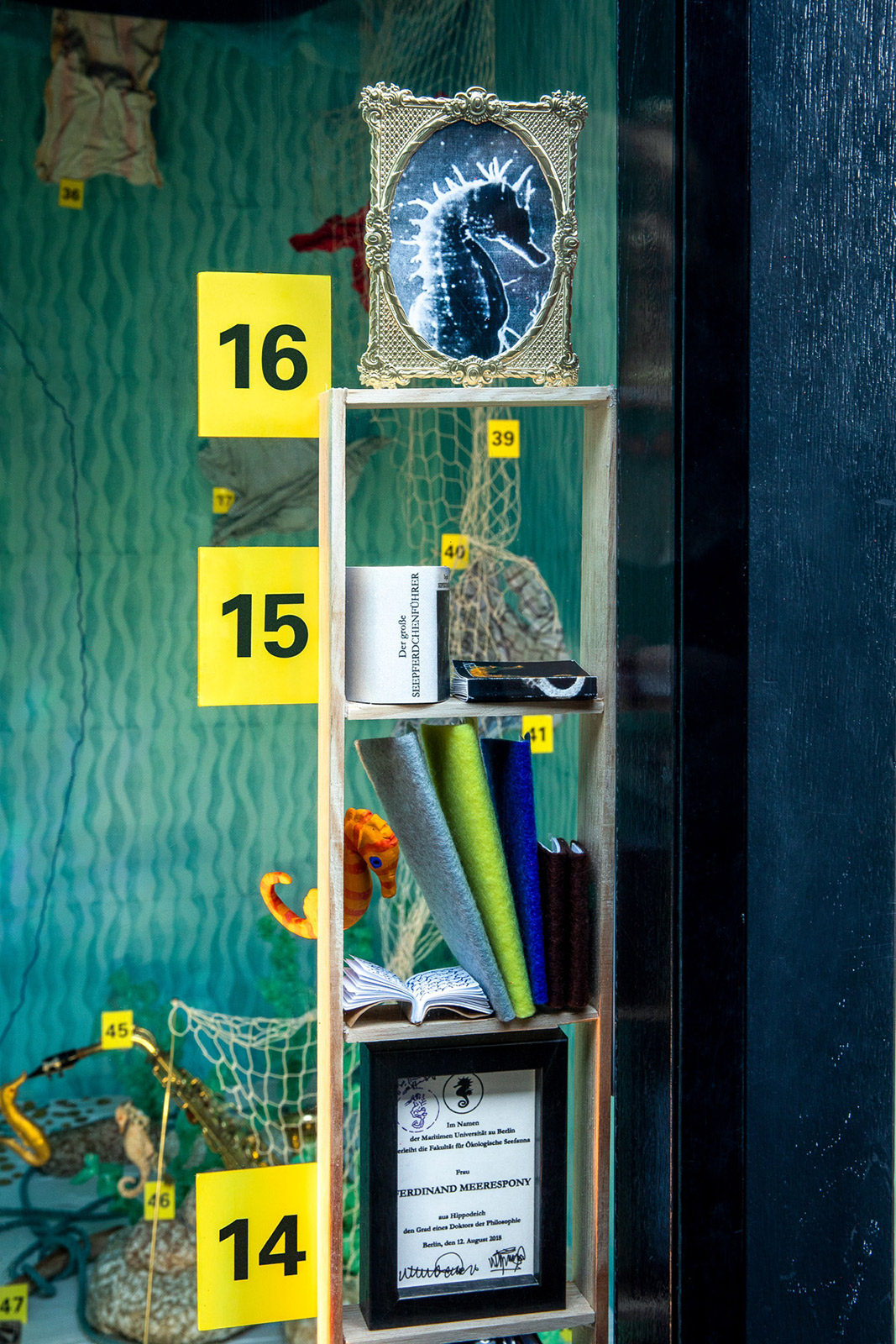
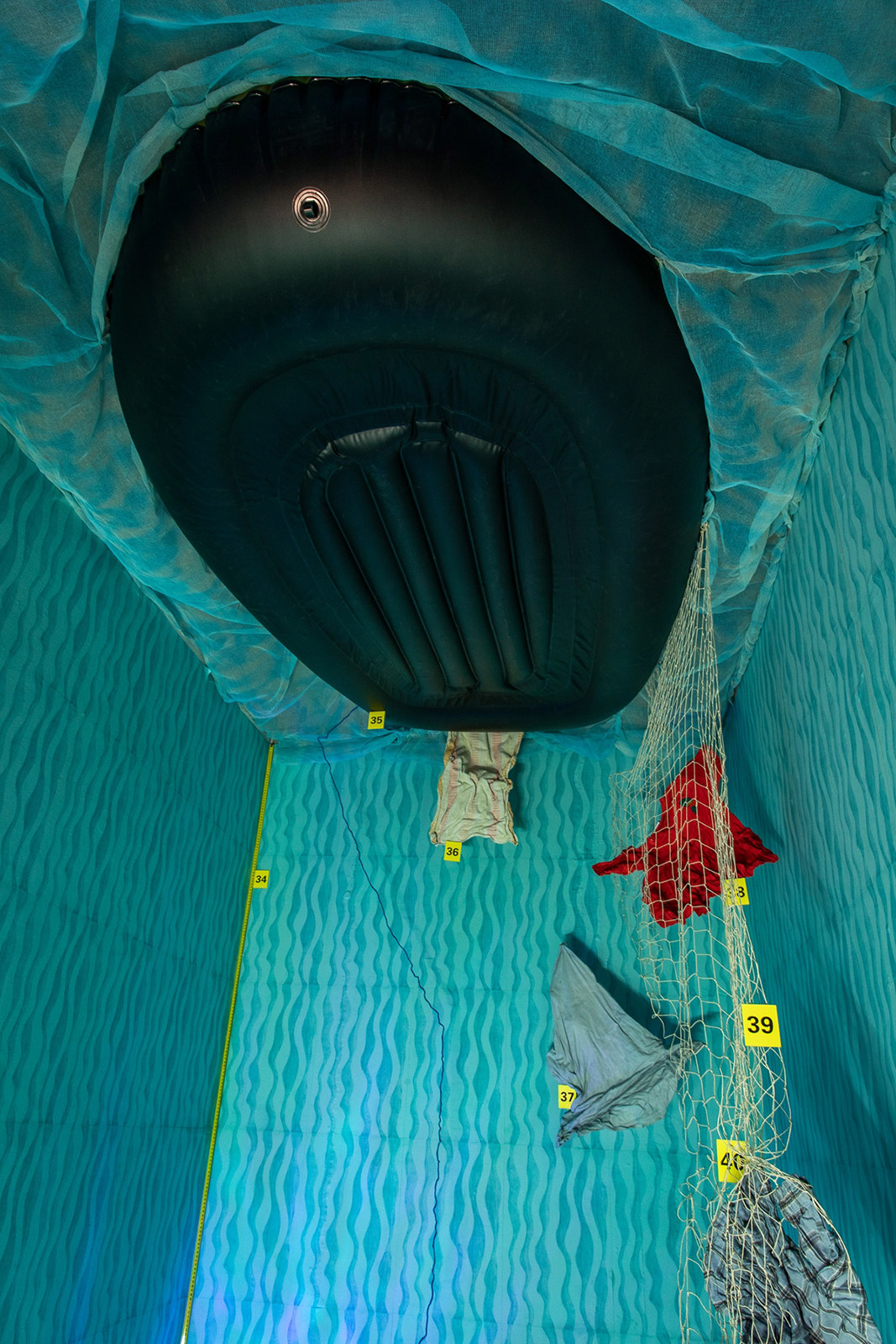
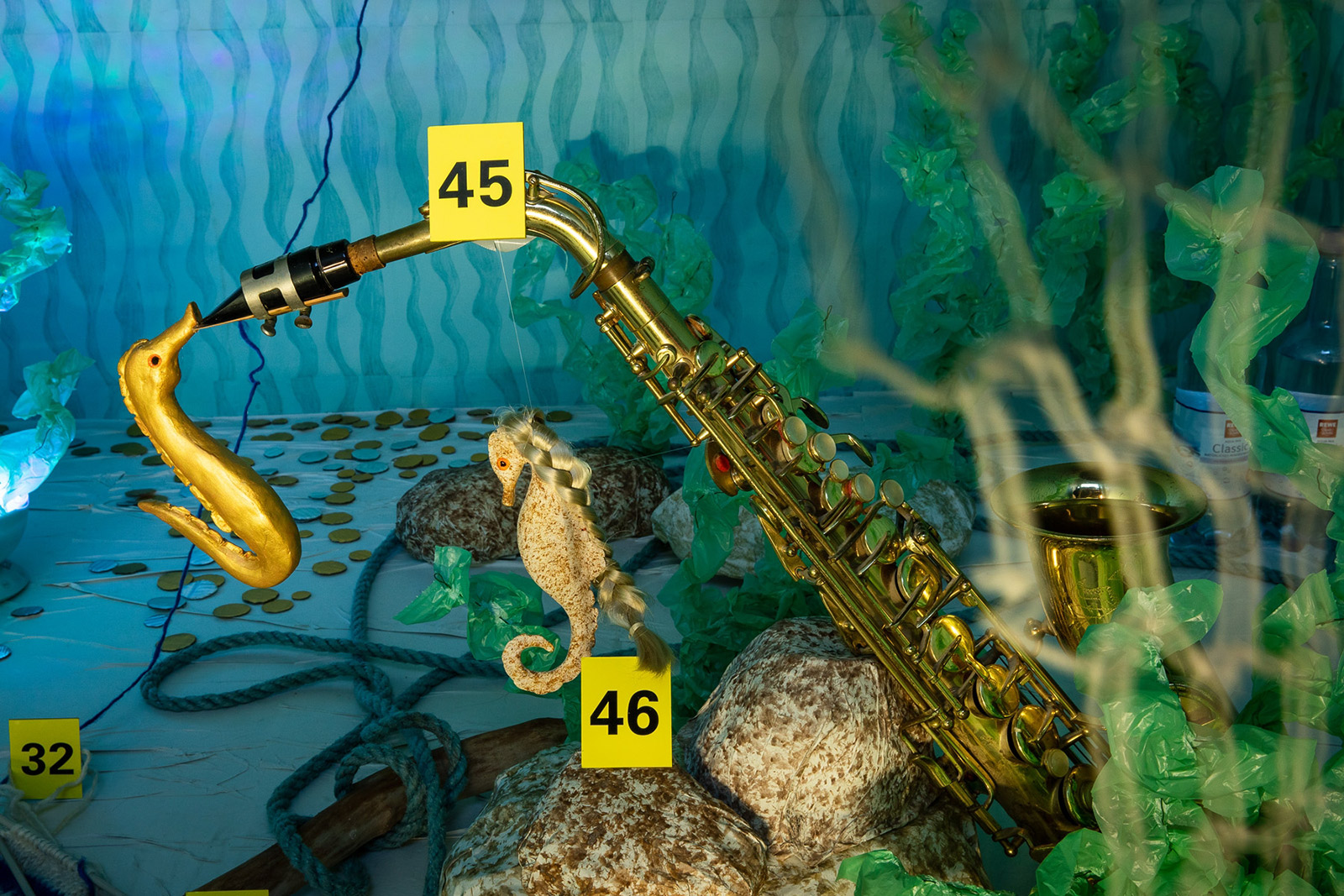
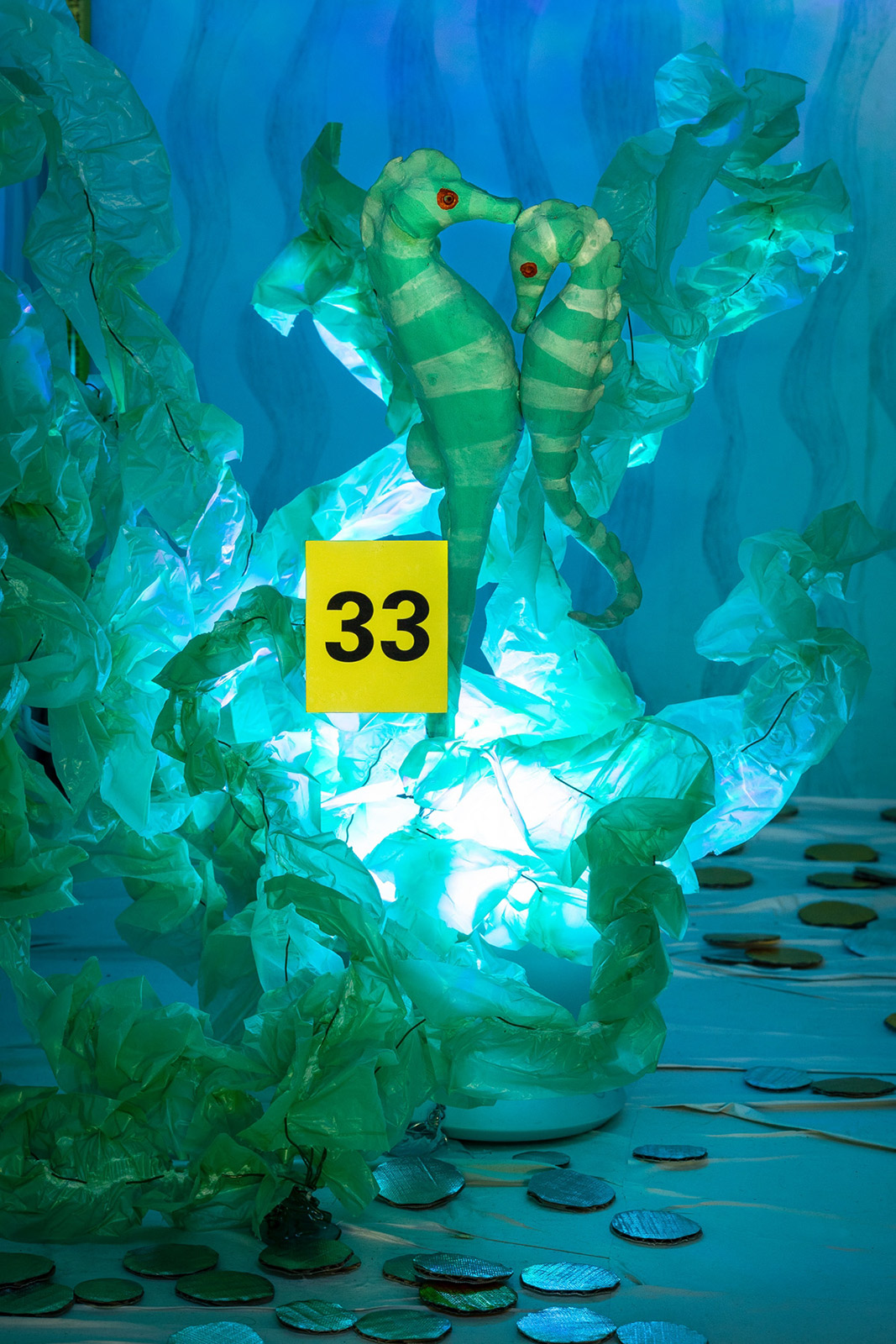
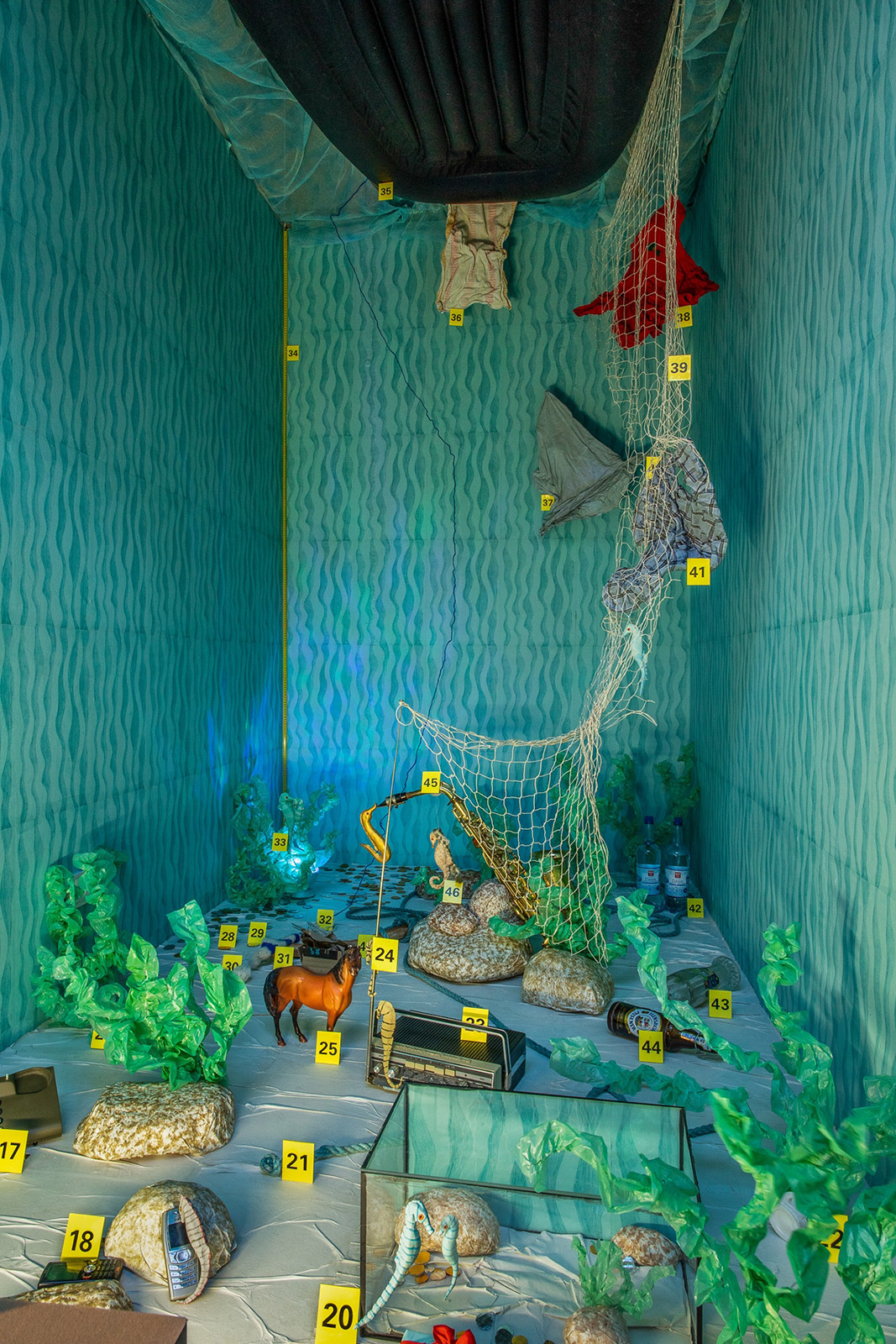
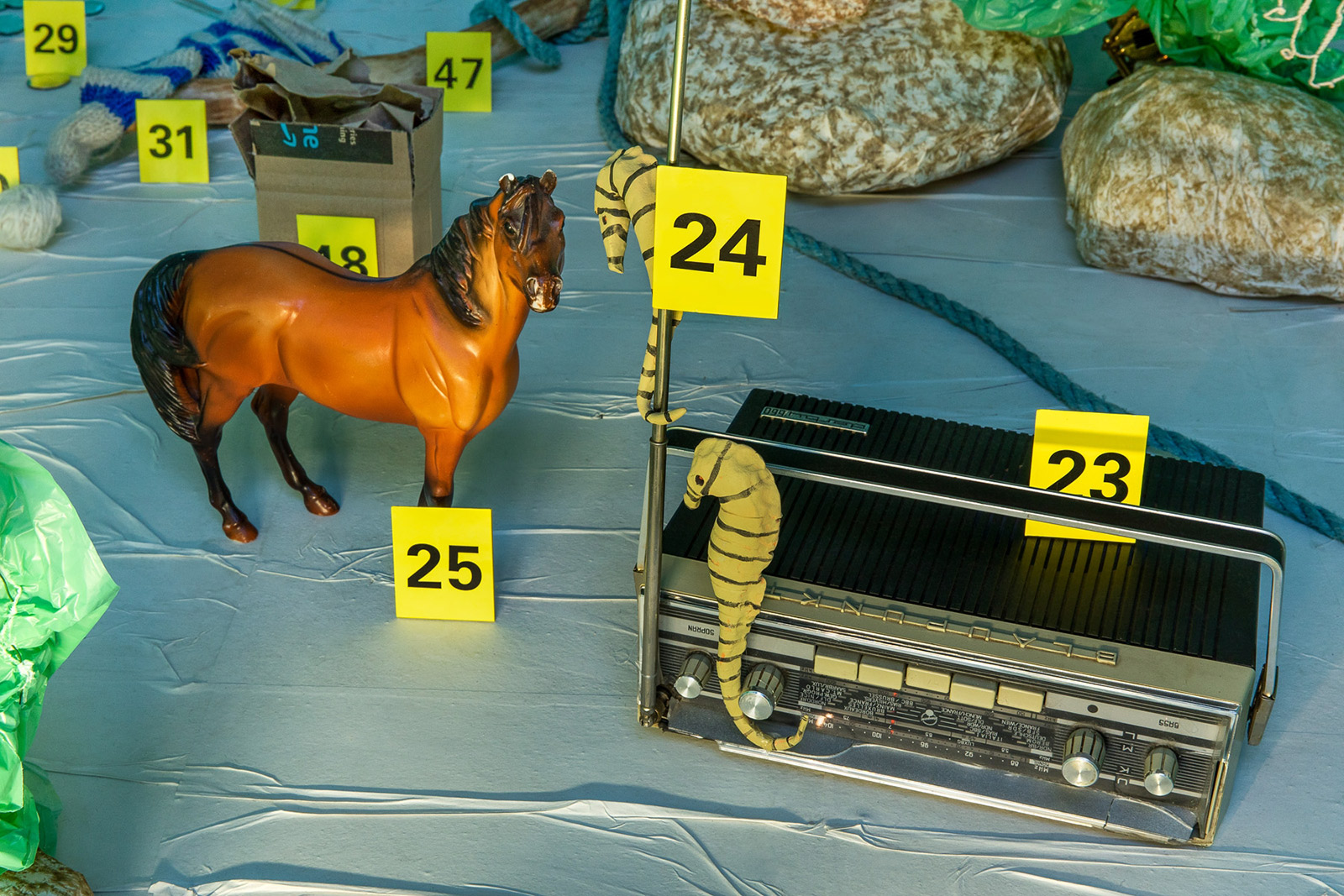
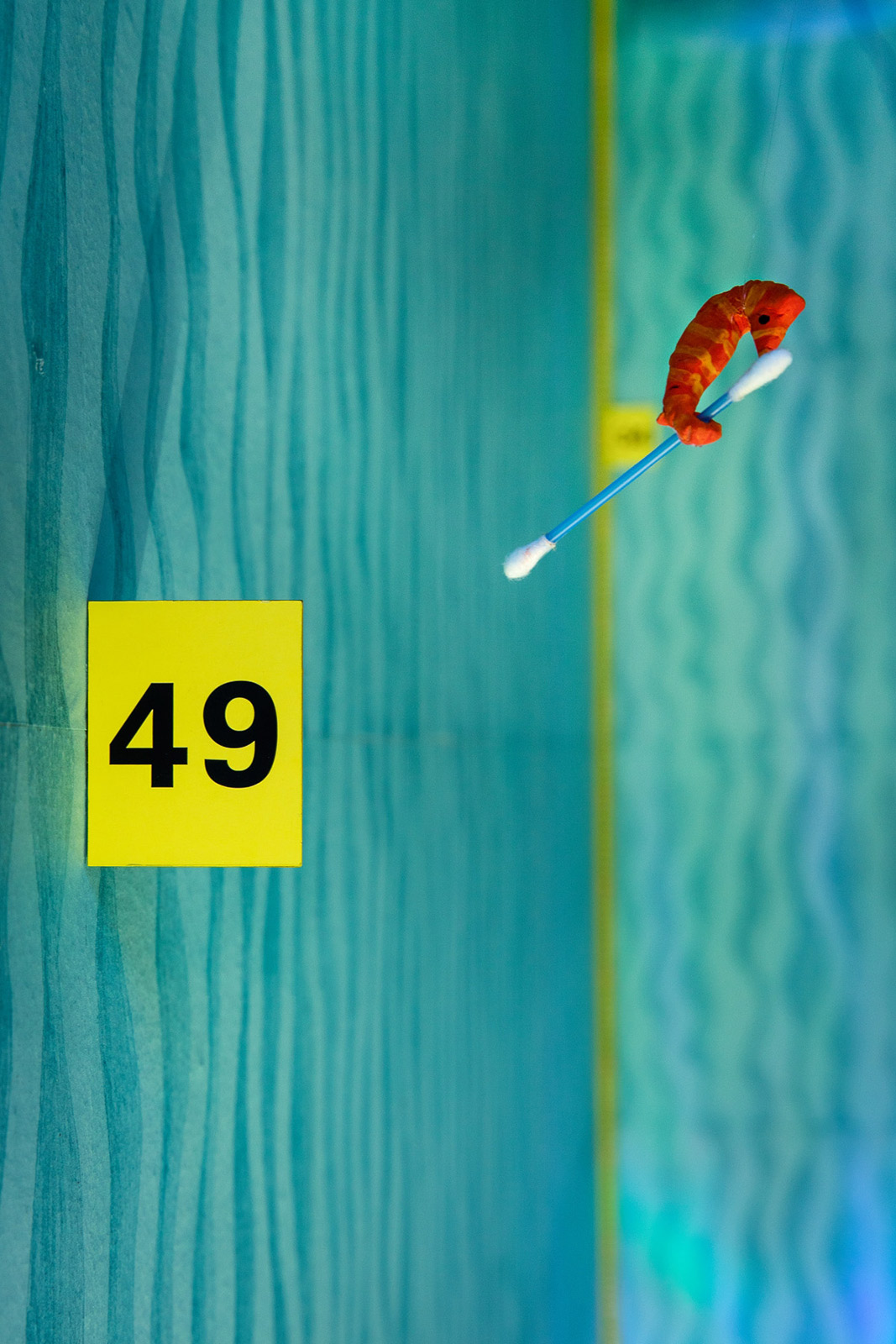
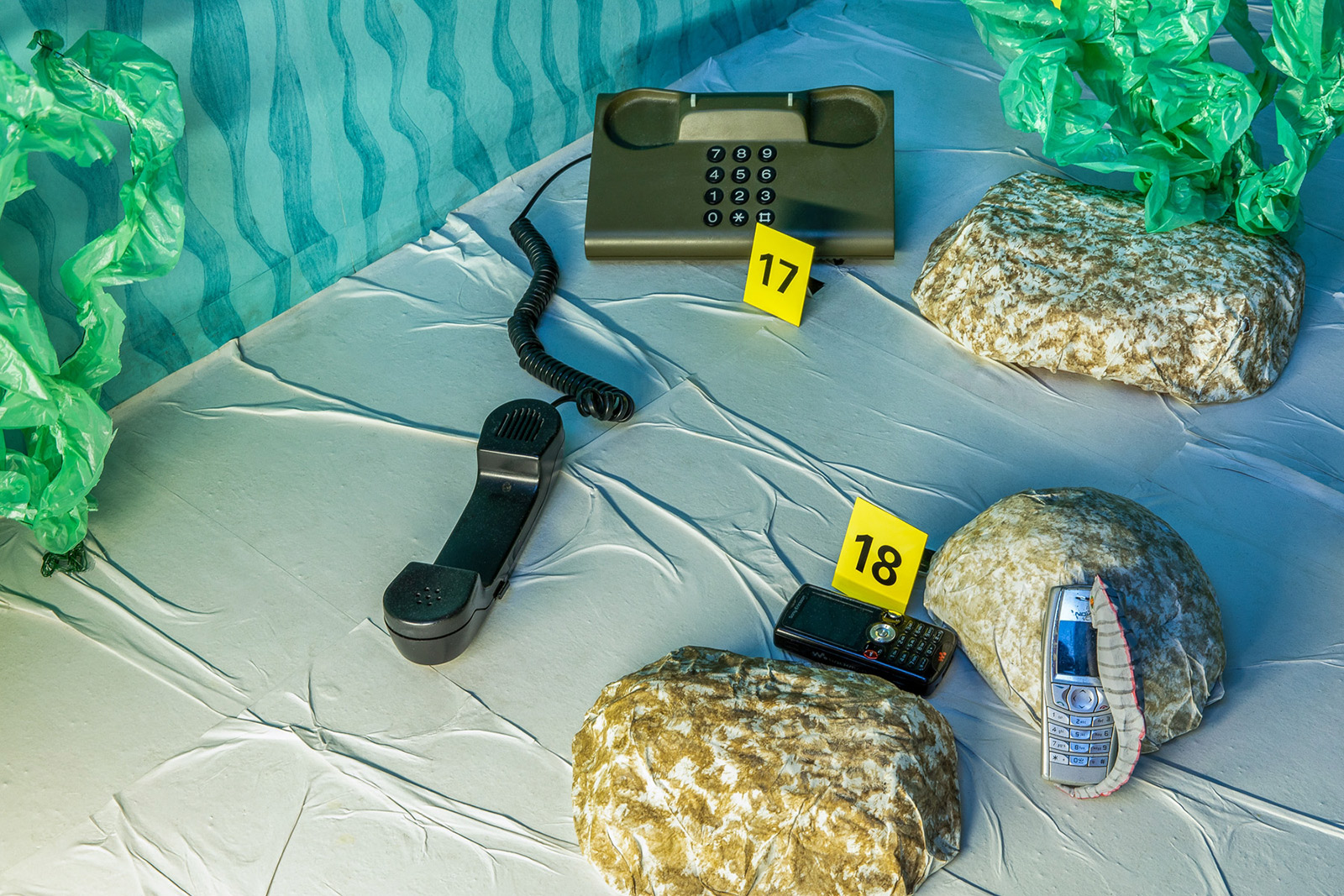
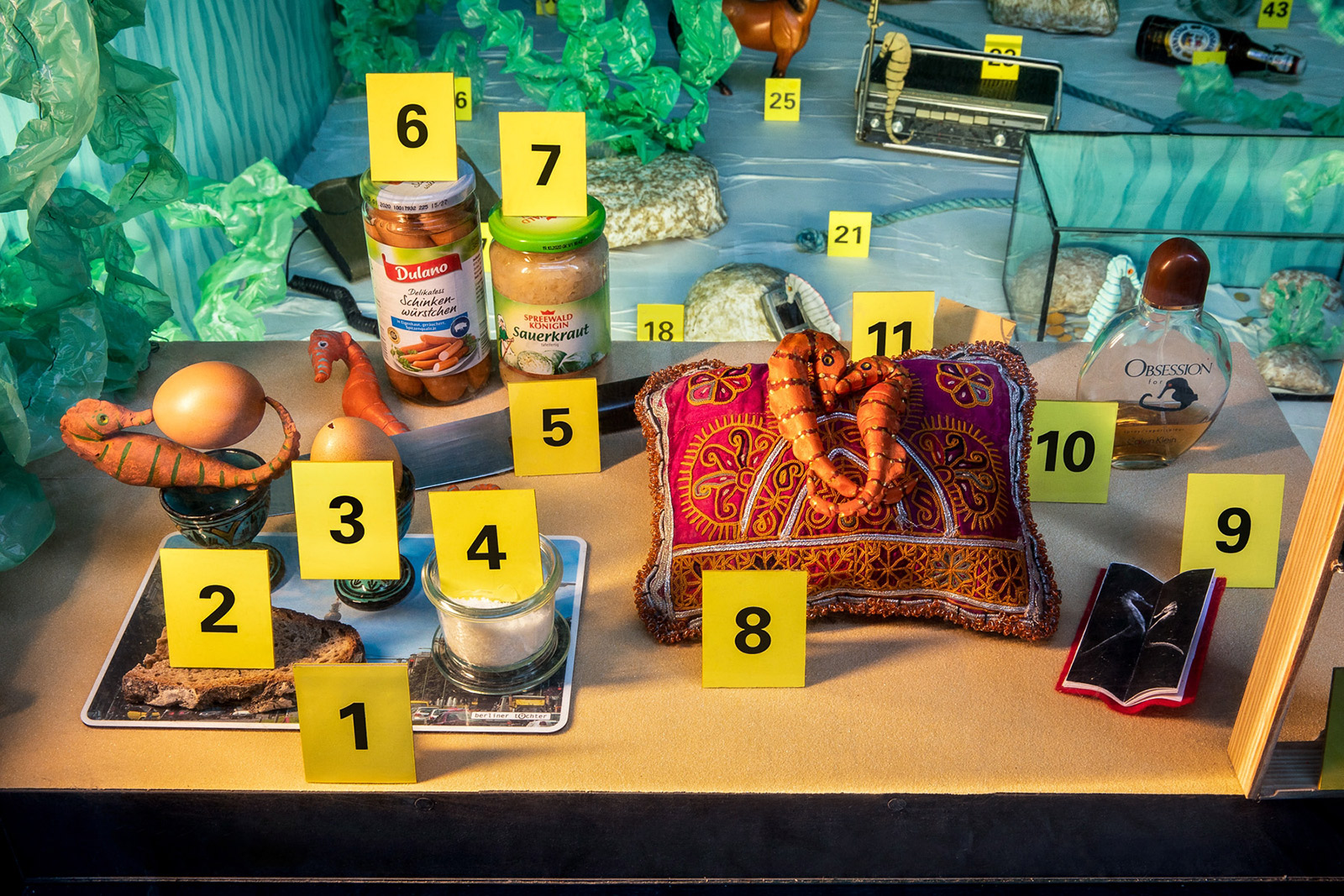
The first installation, Der Krawall (the riot), featured a group of marauding teddy bears (der Bär) pushing over televisions (der Fernseher), spilling honey (der Honig) on the floor and playing pancakes (der Pfannkuchen) on a record player (der Plattenspieler). The second installation, Die Überraschung (the surprise) had as its core element the schultüte, a cone made of paper and filled with goodies and gifts which is given to children to mark their first day of first grade. The schultüte cone shape held a watermelon (die Wassermelone), formed the shape of a turtle’s shell (die Schildkröte), and small models of the German National Football Team (die Mannschaft). The installation for the gender-neutral article “das” was an underwater scene populated by seahorses (Das Seepferdchen). Underneath a rubber boat (das Boot) on the surface, seahorses interacted with various objects such as a cellphone (das Handy), a bottle of beer (das bier), a long rope (das Seil) and a lavishly embroidered bed (das Bett). A small screen in the window of each installation cycled through the fifty nouns corresponding to the objects visible in the scenarios.
Although the vocabulary taught to the beginning German speaker was the springboard for my three scenes, there were potentially revelations for the fluent German speaker as well. Do certain kinds of objects fall most often into one of the three categories? Will some objects when seen in each other’s company expose something about the gendered qualities of these words? To what extent does the gendered nature of a word disappear to a native speaker?